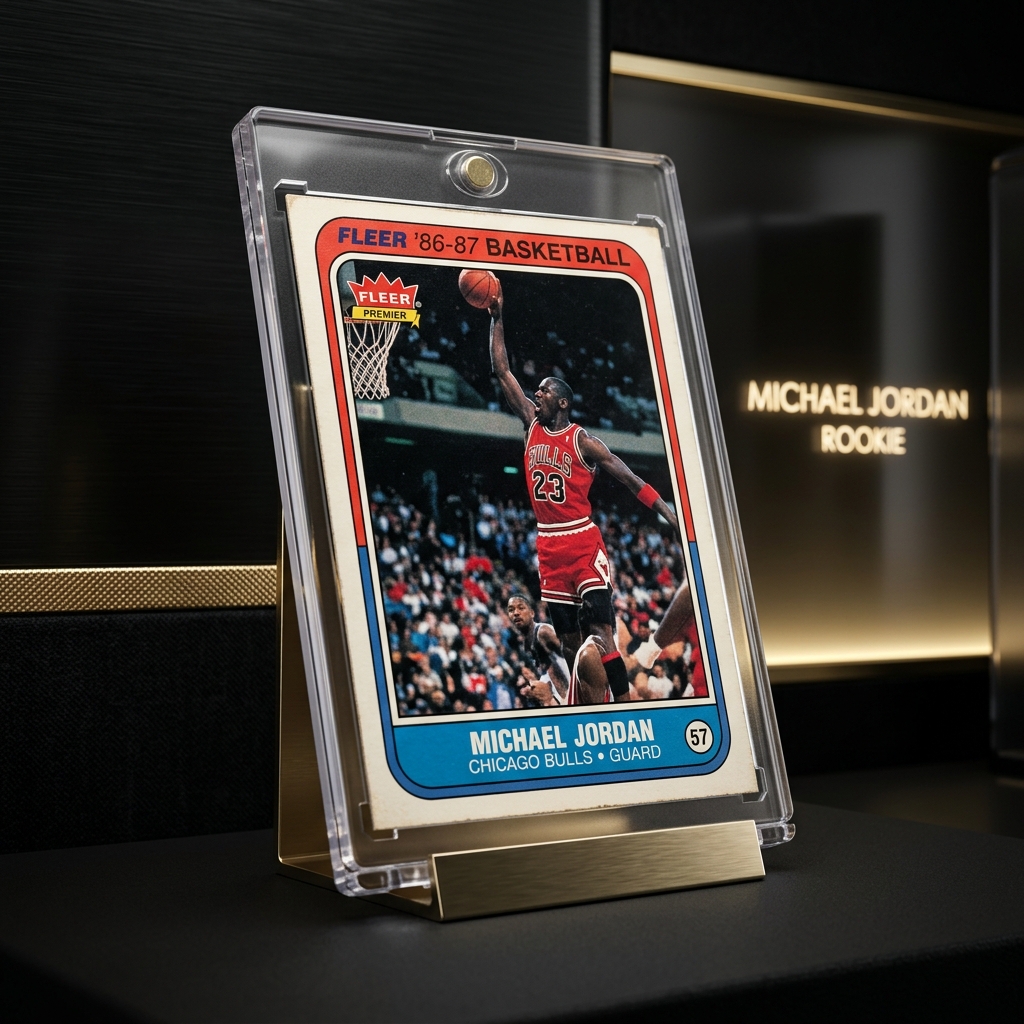
Basketball · 1986
The hobby's most iconic card. ~300 PSA 10 copies exist worldwide — centering is almost impossible to find perfect.
From a $700,000 Michael Jordan Fleer to a $420,000 First Edition Charizard — the definitive cross-sport guide to the rookie cards that define the hobby, with current prices and what makes each one irreplaceable.
The Fundamentals
Not all rookie cards are created equal. The same player can have dozens of different rookie cards, ranging in value from a few dollars to hundreds of thousands — and the difference comes down to a handful of critical factors that every collector needs to understand.
First year of production is the foundation. A card must come from a player's first eligible season to carry true "rookie" cachet. But that's just the starting point. Print run determines scarcity — base set cards from the late 1980s were printed in the millions, while modern numbered parallels (/25, /50, /100) create verifiable, permanent scarcity. When a card says "Refractor /500," only 500 of that exact version exist in the world.
Condition is where value multiplies most dramatically. The grading scale runs from 1 to 10, but the difference between a PSA 9 and a PSA 10 can be 5–10×. The Michael Jordan 1986 Fleer demonstrates this perfectly: a raw Near Mint copy might sell for $500, a PSA 9 for $50,000, and a PSA 10 for up to $1.4 million. Only about 300 PSA 10 copies exist worldwide — condition itself creates rarity from a common card.
Player legacy compounds everything. Cards tied to the greatest players of all time — Jordan, Mantle, Brady — carry inelastic demand because their place in history is permanent. Brand prestige matters too: Topps, Fleer, Panini Prizm, and Upper Deck carry different collector premiums. The issuing set's design, significance, and cultural moment can elevate a card's importance for decades.
The result: the same card in PSA 10 vs. raw condition can vary 1,000× in value. A well-timed purchase of a PSA 10 blue-chip rookie is one of the hobby's most proven stores of value.
Must come from a player's first eligible season. Legitimizes the card's status as the definitive rookie issue.
Numbered parallels (/25, /50, /100) create permanent, verifiable scarcity. Lower serial numbers = higher premiums.
PSA 10 copies can be worth 1,000× more than raw NM copies. Centering, corners, edges, and surface all matter.
HOF status, championships, and cultural impact create inelastic demand. Jordan and Mantle have permanent collector bases.
Topps, Fleer, Panini Prizm, and SP Authentic carry distinct premiums. The issuing brand defines a card's era and status.
The Definitive Collection
From basketball legends to Pokémon crown jewels — these are the cards that define the modern hobby and set the price benchmarks every collector tracks.
Basketball · 1986
The hobby's most iconic card. ~300 PSA 10 copies exist worldwide — centering is almost impossible to find perfect.
Baseball · 1952
The most iconic baseball card ever printed. A PSA 9 sold for $5.2M in 2022, setting the all-time baseball record.
Football · 2000
The GOAT football card. Numbered /1250, making it irreplaceable by definition — the most important football card ever issued.
Basketball · 2003
The King's chrome rookie. The Refractor /500 PSA 10 sold for $2.4M. Base Chrome PSA 10 trades at $30K–$80K.
Pokémon · 1999
The most iconic Pokémon card ever. 1st Edition PSA 10 sold for $420,000+. The crown jewel of the entire Pokémon hobby.
Baseball · 1989
Card #1 in the landmark 1989 Upper Deck set. Millions exist, but PSA 10 copies are genuinely special and consistently sought.
Basketball · 2023
The generational talent's most liquid rookie. Strong long-term upside if he fulfills his otherworldly potential.
Basketball · 1996
The Black Mamba's defining rookie. Topps Chrome produced the sharpest images of the era and demand remains perpetually strong.
Football · 2017
Three Super Bowl titles have cemented Mahomes as the NFL's premier active star. Prizm Silver PSA 10 demand is consistently high.
Baseball · 2011
Baseball's most important modern rookie. Multiple MVP awards and unanimous HOF trajectory make this the benchmark baseball card of his era.
Baseball · 2018
The two-way phenom who changed baseball. As he approaches HOF eligibility, his rookie cards have appreciated dramatically.
⚾ Baseball
Baseball has the longest card collecting history of any sport, stretching back over 130 years to the tobacco card era. That depth of history creates some of the hobby's most extraordinary valuations — where condition rarity from the 1950s and earlier can produce truly museum-tier price points.
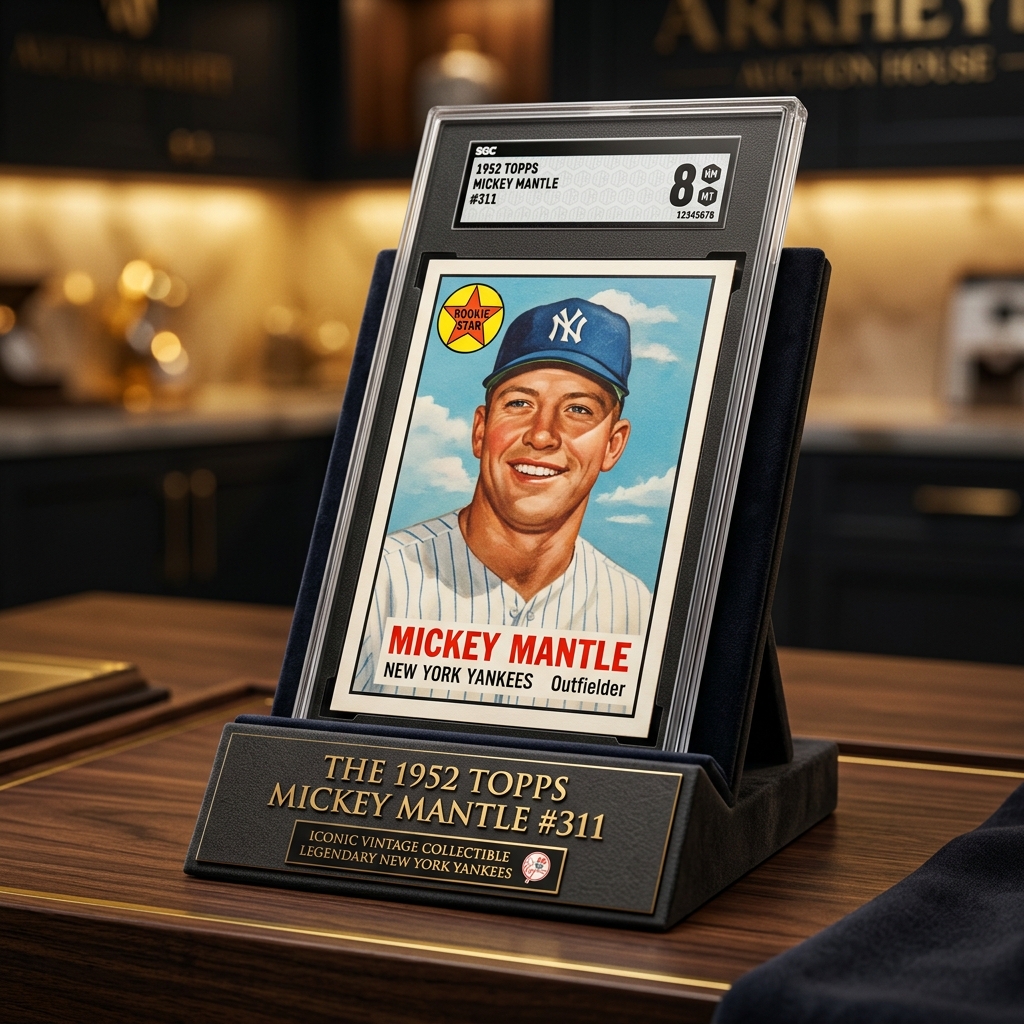
No card in the hobby generates more reverence than the 1952 Topps Mickey Mantle #311. Technically not Mantle's first card (he appeared in 1951 Bowman), the 1952 Topps issue is universally recognized as his definitive rookie-era flagship card and the most important piece of cardboard in American sports collecting. The card was printed in massive quantities for the era — but most were discarded, damaged, or famously dumped in the Atlantic Ocean when Topps couldn't sell excess inventory.
The survivors that exist in pristine condition are extraordinarily rare. In August 2022, a PSA 9 copy sold for $12.6 million at Heritage Auctions — the highest price ever paid for a sports card at that time. PSA 9 examples regularly trade in the $2M–$5.2M range. Even raw, heavily played copies command thousands of dollars. Owning a high-grade Mantle is the Mount Everest of sports card collecting.
Not technically a rookie card by modern definitions, the T206 Honus Wagner is the holy grail of all card collecting. Issued as part of the American Tobacco Company's T206 set in 1909, Wagner famously demanded his image be removed from tobacco products — creating accidental ultra-scarcity. Only around 50–200 copies are believed to exist. A PSA 5 copy sold for $7.25 million in 2022. The Wagner exists in a category of its own: the single most famous sports card ever made.
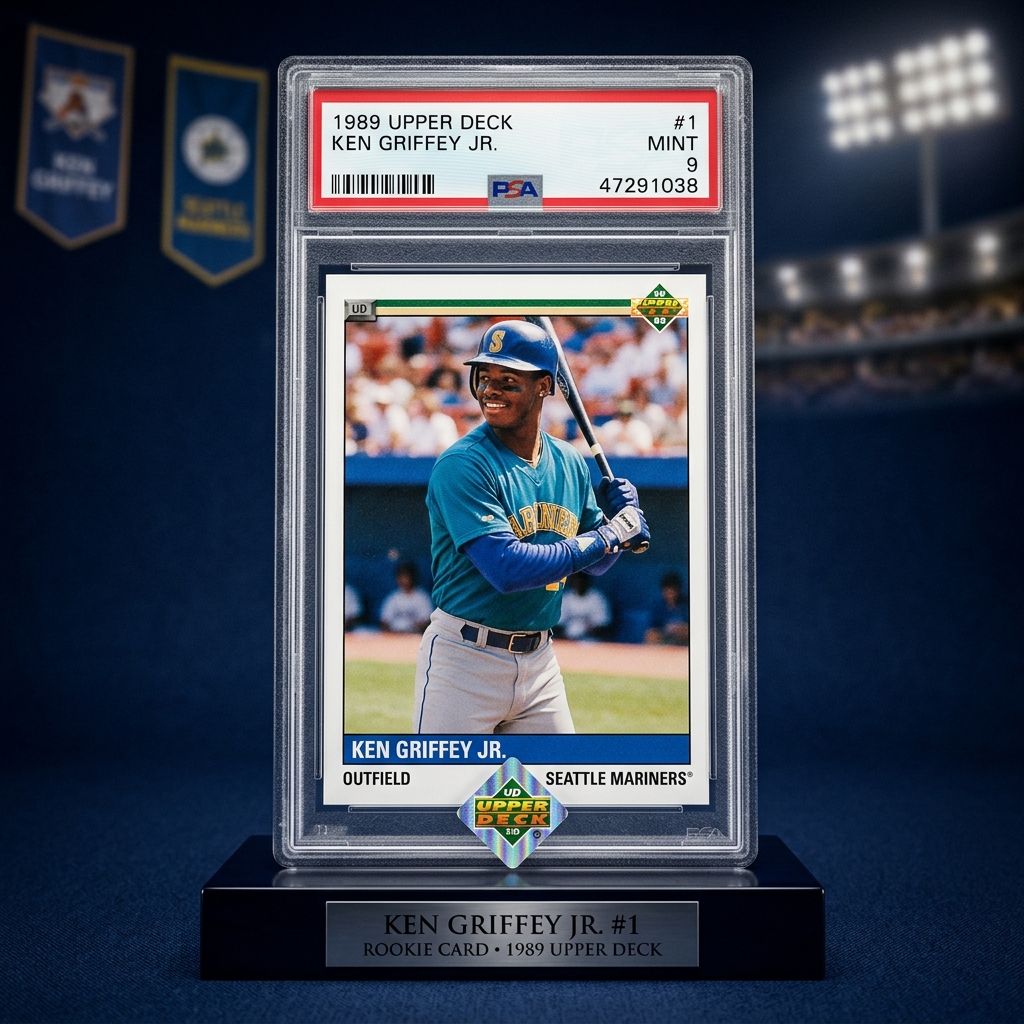
The 1989 Upper Deck Ken Griffey Jr. rookie card occupies a unique place in the hobby: it was the first card in a landmark set that revolutionized card design with UV coating, superior photography, and anti-counterfeiting holograms. Card #1 featuring the Kid in his Mariners uniform became an instant icon. Despite millions being printed, PSA 10 copies are scarce due to centering issues and surface wear from mass production handling.
Mike Trout's 2011 Topps Update rookie is baseball's most important modern card. With multiple MVP awards and a unanimous Hall of Fame trajectory, Trout's rookie cards are the benchmark for contemporary baseball investment. Printed in high quantities but with excellent centering challenges, PSA 10 copies carry enormous premiums. Autographed parallels and refractors have sold for hundreds of thousands.
The two-way phenom changed baseball forever, and his 2018 Topps Update rookie cards have followed his career arc upward. As the only player since Babe Ruth to dominate both pitching and hitting at the MLB level, Ohtani's cards carry cross-market collector appeal that few players can match. His $700M Dodgers contract further elevated demand for his early cardboard.
The Ryan Express appeared as a Mets pitcher on his 1968 Topps rookie card — a true vintage grail. Seven no-hitters and 5,714 career strikeouts make Ryan the definitive power pitcher of his era. PSA 8 copies regularly trade in the $1,500–$4,000 range, with PSA 10 examples near impossible to find from this era's production quality.
| Card | Year | Set | Raw NM | PSA 9 | PSA 10 |
|---|---|---|---|---|---|
| Mickey Mantle #311 | 1952 | Topps | $5K–$50K | $2M–$5.2M | N/A (none known) |
| Honus Wagner | 1909 | T206 | $1M+ | $7.25M | N/A |
| Ken Griffey Jr. #1 | 1989 | Upper Deck | $10–$30 | $300–$600 | $600–$1,500 |
| Mike Trout | 2011 | Topps Update | $300–$800 | $3K–$8K | $10K–$50K+ |
| Shohei Ohtani | 2018 | Topps Update | $30–$100 | $150–$400 | $400–$1,200 |
| Nolan Ryan #177 | 1968 | Topps | $200–$600 | $1.5K–$4K | $50K+ |
🏀 Basketball
Basketball cards have seen the most dramatic appreciation of any sport over the past decade. The NBA's global appeal and the sport's superstar-driven culture create enormous demand for cards tied to the all-time greats — led by the single most iconic modern sports card: the 1986 Fleer Michael Jordan.
Understanding why the Jordan Fleer commands $700K–$1.4M in PSA 10 requires understanding scarcity. Millions of 1986 Fleer cards were printed, but the production process was imperfect — cards frequently came off the press miscut, off-center, or with surface issues. The PSA 10 population report shows only approximately 300 copies have ever achieved a perfect grade, out of tens of thousands submitted. That 300-copy PSA 10 pool, combined with the greatest basketball player of all time's legacy and the card's stunning design, creates a perfect storm of demand over permanently fixed supply.
Jordan's six championships, five MVP awards, and cultural ubiquity mean the demand floor for this card never erodes. The Jordan Fleer PSA 10 is the single most liquid and universally recognized card in the modern hobby. Every major auction sets a new benchmark. A raw Near Mint copy can be found for $200–$600; the gulf to PSA 10 is the most dramatic in all of collecting.
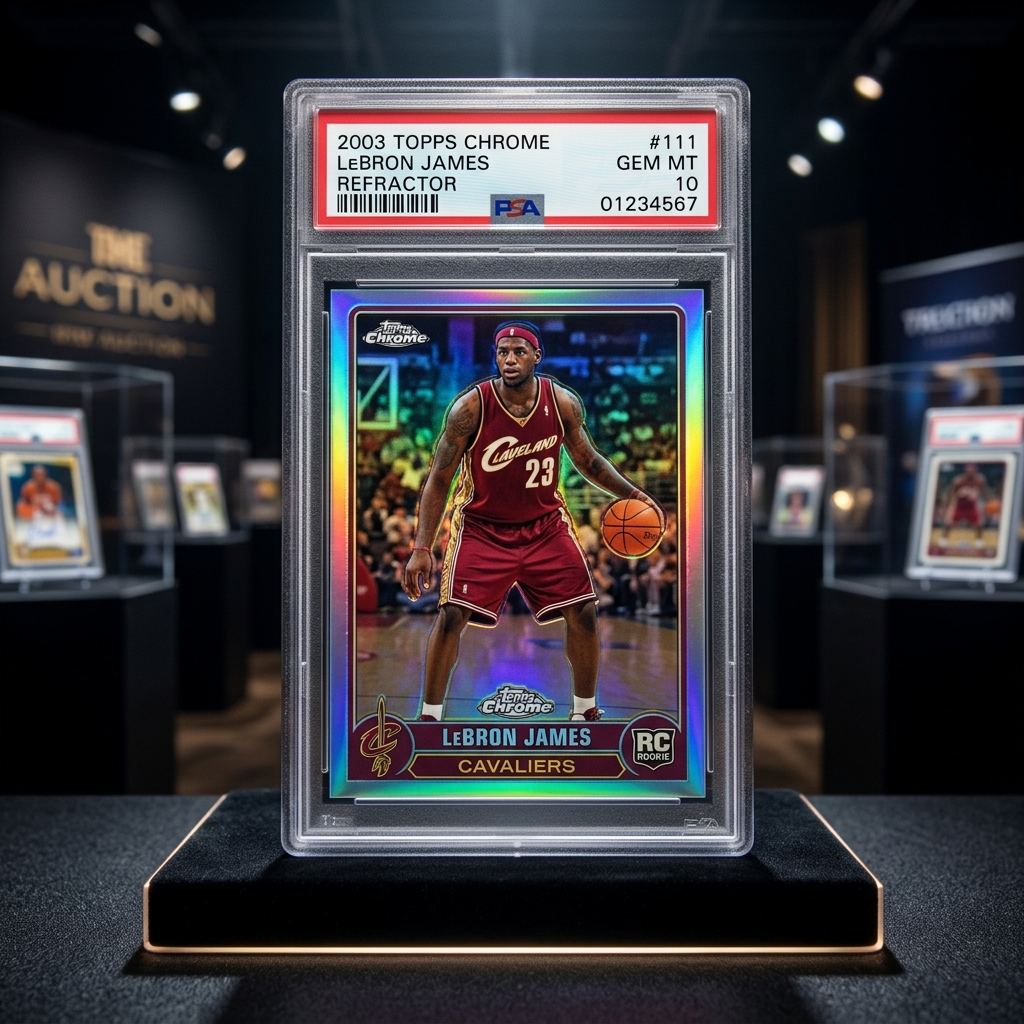
LeBron's 2003–04 rookie class produced multiple grail-tier cards. The Topps Chrome #111 base is the most liquid entry point, with PSA 10 copies at $30K–$80K. The real prize is his Upper Deck Exquisite Collection RC Patch Autograph, numbered /99, which has crossed $2.4M. His Topps Chrome Refractor /500 PSA 10 also sold for over $2.4M. Four championships and the GOAT debate with Jordan have kept demand perpetually elevated.
Kobe's 1996 Topps Chrome rookie captured the Black Mamba at his electrifying debut. Five NBA championships and his tragic 2020 passing created an enormous spike in demand for his cards. The Topps Chrome #138 PSA 10 trades at $30K–$80K, with refractor parallels significantly higher. His 1996–97 Finest Refractor #74 is among the hobby's most coveted 1990s basketball cards.
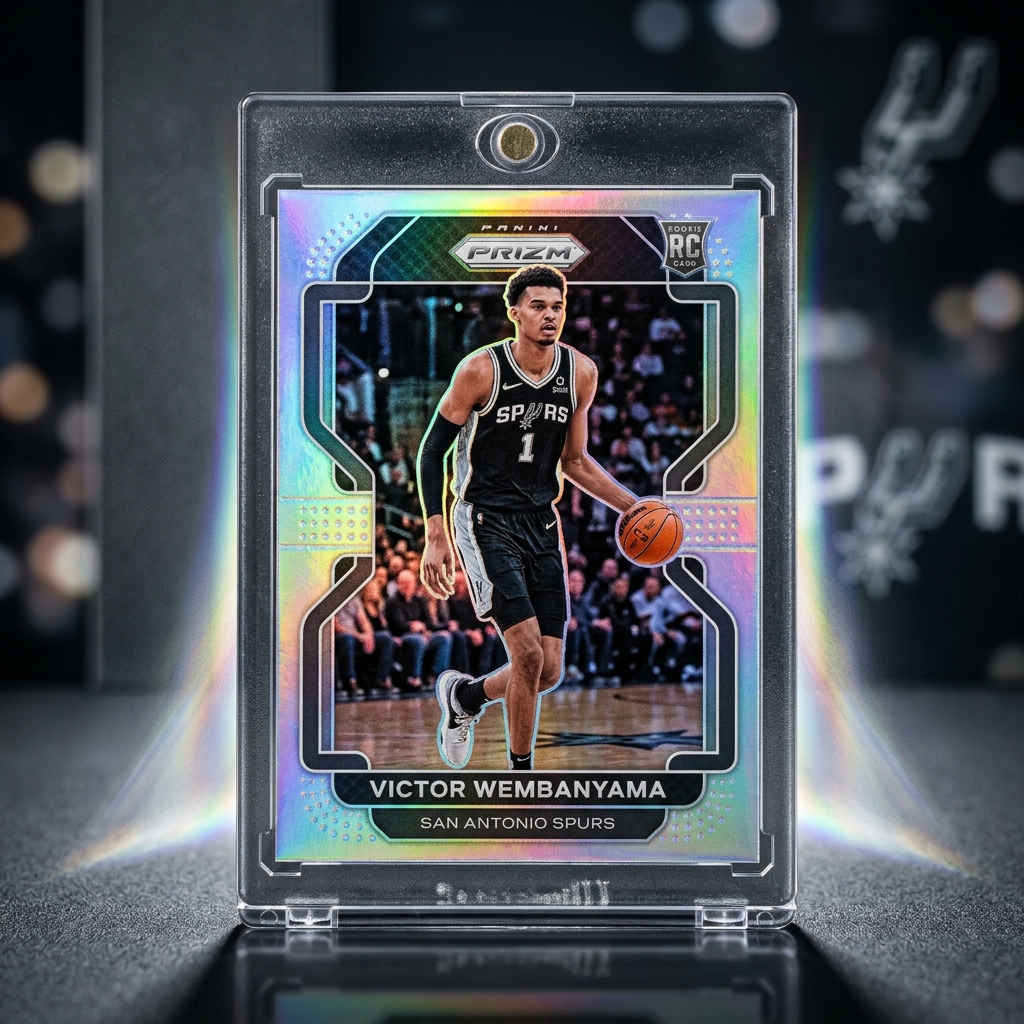
The French phenom who entered the NBA as perhaps the most hyped prospect since LeBron James. Wembanyama's 7'4" wingspan and guard skills have already produced historic defensive seasons. His Prizm Silver PSA 10 at $800–$2,500 represents significant potential upside for collectors betting on a generational career trajectory.
Luka's 2018–19 Prizm Silver PSA 10 has become one of the hobby's most traded modern cards, with values at $3K–$8K and rising steadily as his championship contention deepens. His base Topps rookie card is also widely collected, making him one of the most accessible modern superstars in the hobby.
The Splash Brothers era changed basketball forever. Curry's 2009 Topps Chrome #101 PSA 10 trades at $2K–$5K, with autographed parallels significantly higher. Four championships and the all-time three-point record have solidified Curry's place in the HOF-tier rookie conversation.
| Card | Year | Set | Raw NM | PSA 9 | PSA 10 |
|---|---|---|---|---|---|
| Michael Jordan #57 | 1986 | Fleer | $200–$600 | $30K–$80K | $700K–$1.4M |
| LeBron James #111 | 2003 | Topps Chrome | $300–$800 | $5K–$15K | $30K–$80K |
| LeBron Exquisite /99 Auto | 2003 | UD Exquisite | — | $500K+ | $2.4M+ |
| Kobe Bryant #138 | 1996 | Topps Chrome | $200–$600 | $5K–$15K | $30K–$80K |
| Victor Wembanyama | 2023 | Panini Prizm Silver | $100–$400 | $400–$800 | $800–$2,500 |
| Luka Dončić | 2018 | Panini Prizm Silver | $200–$600 | $1K–$3K | $3K–$8K |
| Stephen Curry #101 | 2009 | Topps Chrome | $50–$150 | $600–$1,500 | $2K–$5K |
🏈 Football
Football card collecting has exploded over the past decade, driven by the NFL's massive viewership and the sport's passion-driven fanbase. The hobby centers on numbered rookies from Panini, with Prizm and Select leading the market — but vintage cards from Topps in the 1950s–1980s remain the most historically significant pieces in the category.
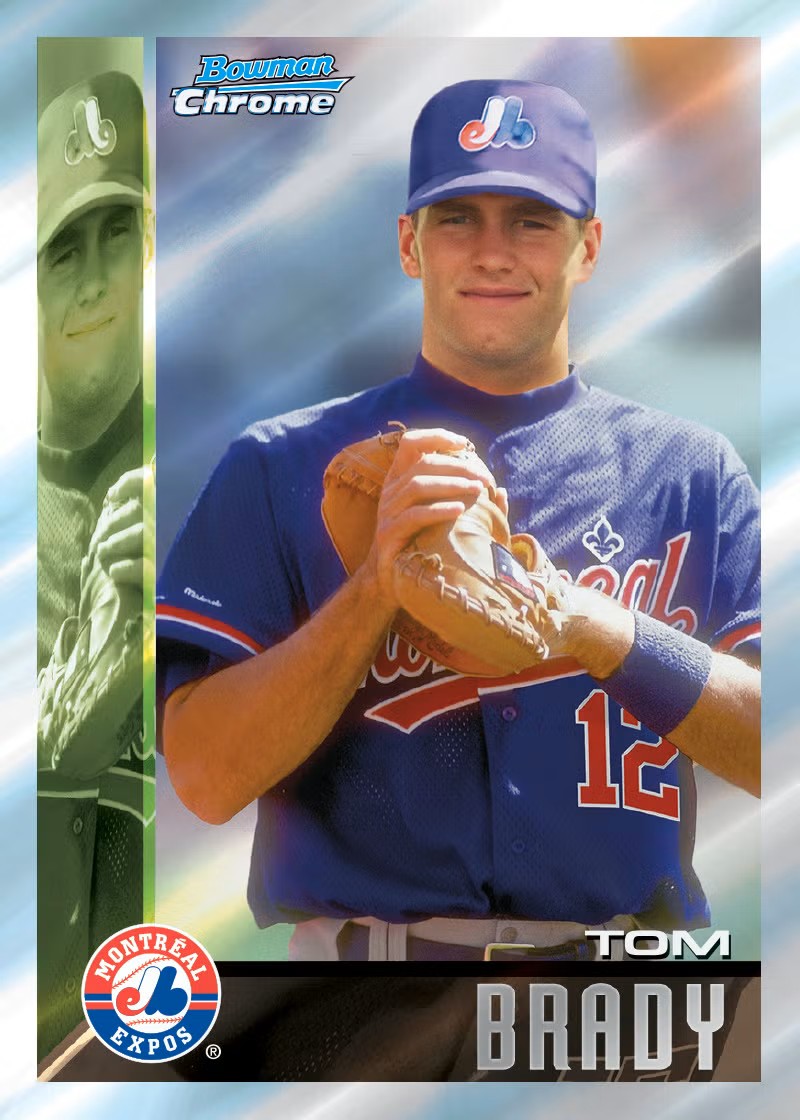
The single most important football card in the hobby. Brady's 2000 SP Authentic RC was printed to a serial number of /1250 — meaning only 1,250 copies exist in the world, period. There will never be more. Seven Super Bowls and the universal "GOAT" designation have created demand that permanently outpaces supply. A PSA 10 has crossed $100,000+ at major auctions, with BGS 9.5 copies trading at $50K–$80K. Even PSA 7 copies are worth $10,000+. The serial-numbered scarcity from the original print run makes this card unlike almost any other — every collector knows exactly how many exist.
Mahomes has become the NFL's most marketable active star, with three Super Bowl rings, multiple MVP awards, and a decade of elite play still ahead of him. His 2017 Prizm Silver PSA 10 trades at $7K–$12K and has been as high as $18K during market peaks. As the face of the league, his cards carry premium liquidity.
The greatest wide receiver in NFL history. Rice's 1986 Topps base rookie has strong demand among vintage football collectors. PSA 10 copies are extremely rare due to production quality from this era and command $10K–$40K at auction.
Four Super Bowl rings and zero interceptions in championship games. Montana's 1981 Topps rookie in PSA 10 trades at $30K–$80K, while PSA 8 copies are accessible at $1,500–$4,000. The early 1980s Topps set carries genuine vintage appeal for football collectors.
The original NFL quarterback icon. Unitas's 1957 Topps RC is the definitive vintage football card for serious collectors of the era. In PSA 8+, these cards are extremely rare and command $10K–$50K depending on grade. A true hobby grail for football antiquarians.
| Card | Year | Set | Raw | PSA 9 | PSA 10 |
|---|---|---|---|---|---|
| Tom Brady #118 /1250 | 2000 | SP Authentic | $10K–$30K | $40K–$70K | $100K+ |
| Patrick Mahomes | 2017 | Panini Prizm Silver | $500–$2K | $3K–$6K | $7K–$12K |
| Jerry Rice #161 | 1986 | Topps | $50–$200 | $2K–$6K | $10K–$40K |
| Joe Montana #216 | 1981 | Topps | $100–$400 | $5K–$15K | $30K–$80K |
| Johnny Unitas #138 | 1957 | Topps | $200–$800 | $3K–$10K | $10K–$50K |
⚡ Pokémon
In Pokémon collecting, the concept of a "rookie card" translates to the first printed appearance of a character — typically in the 1999 WOTC Base Set. The franchise has produced some of the most extraordinary auction results in hobby history, driven by nostalgia, global fandom, and the unique 1st Edition vs. Unlimited vs. Shadowless stratification that creates permanent scarcity tiers.
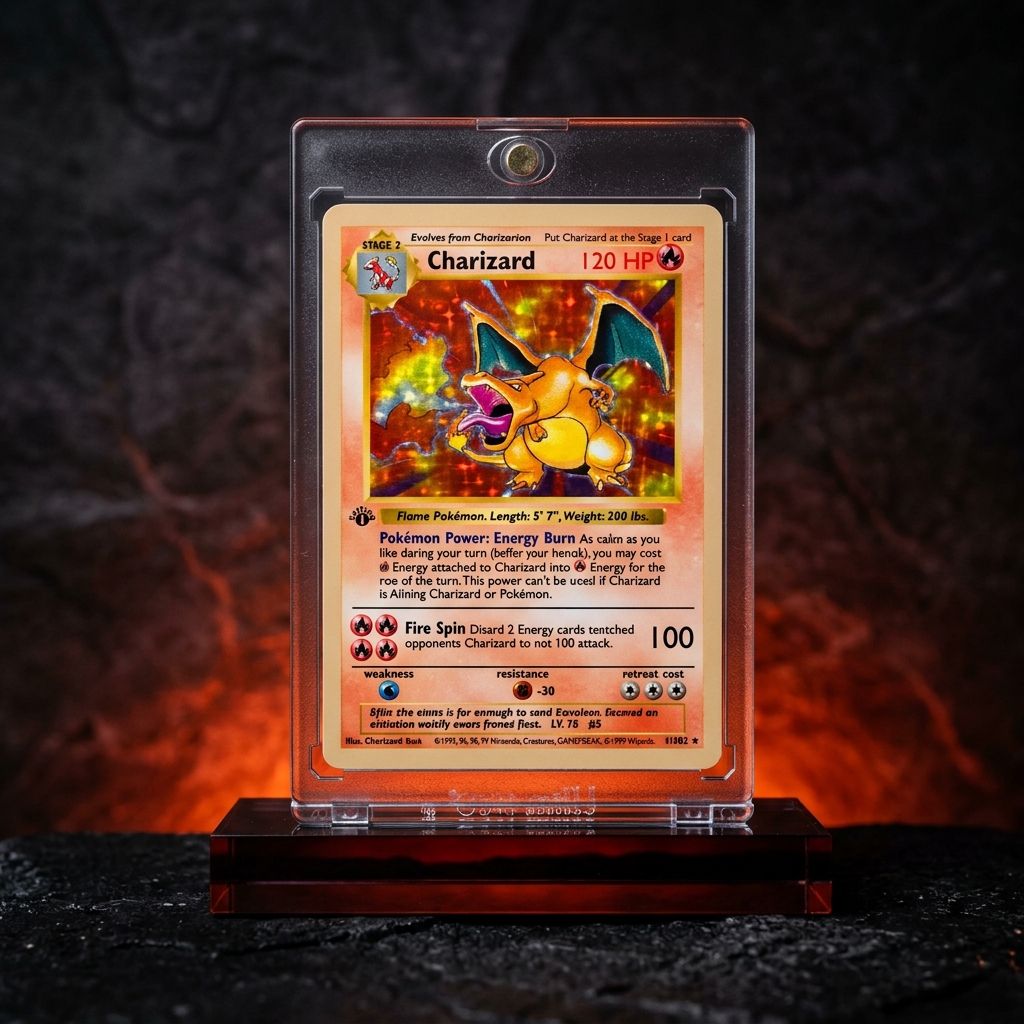
The crown jewel of Pokémon collecting. The 1999 WOTC Base Set 1st Edition Charizard is to Pokémon what the Jordan Fleer is to basketball — the single card every collector wants. Logan Paul famously purchased a PSA 10 copy for $420,000 live on YouTube, creating a cultural moment that introduced millions of new collectors to the hobby. PSA 10 examples in 1st Edition condition are extraordinarily rare due to the difficulty of achieving perfect centering and surface condition on 1999 printing stock.
Understanding the three tiers is essential: 1st Edition cards have a stamp on the card face and are the most valuable. Shadowless copies lack the shadow under the artwork box and are the second tier. Unlimited copies with the full shadow design were printed in massive quantities. The price difference between tiers is 5–20×.
The most expensive Pokémon card ever sold. Only 41 copies of the Pikachu Illustrator are known to exist — distributed as prizes in a 1998 Japanese illustration contest. Logan Paul sold a PSA 10 copy for $5.275 million in 2021, making it one of the most valuable trading cards of any category in history. Its impossibly low population makes it the Wagner T206 of Pokémon.
Modern Pokémon's most coveted card. The Umbreon VMAX Alternative Art from 2021's Evolving Skies set became the benchmark for modern card values, with PSA 10 copies trading at $1,000–$3,500. The stunning full-art design and Umbreon's massive fanbase create demand that outpaces nearly every other modern release.
| Card | Year | Set | Raw | PSA 9 | PSA 10 |
|---|---|---|---|---|---|
| Charizard #4 — 1st Edition | 1999 | Base Set WOTC | $2K–$10K | $40K–$100K | $420K+ |
| Charizard #4 — Shadowless | 1999 | Base Set WOTC | $500–$2K | $6K–$20K | $40K–$100K |
| Charizard #4 — Unlimited | 1999 | Base Set WOTC | $200–$600 | $1K–$3K | $4K–$10K |
| Pikachu Illustrator | 1998 | CoroCoro Promo | — | $1M+ | $5.27M |
| Umbreon VMAX Alt Art | 2021 | Evolving Skies | $200–$500 | $500–$1,200 | $1K–$3,500 |
💰 Investment Strategy
Not all rookie card investments carry equal risk — or equal potential reward. The most successful collectors use a tiered framework that matches their capital, risk tolerance, and investment horizon. Here's how the pros think about rookie card allocation.
The most secure tier in hobby investing. These cards have proven multi-decade track records, inelastic global demand, and permanent historical significance. You're not speculating — you're acquiring a piece of sports history with a proven buyer pool.
Established HOF-trajectory players whose cards have demonstrated market liquidity and sustained demand. Suitable for serious collectors looking for meaningful appreciation without the extreme capital requirements of Tier 1.
Current prospects and recent rookies with significant upside if their careers develop. High potential returns but also high risk from injury, performance decline, or market saturation. Never invest money you can't afford to lose in this tier.
Regardless of tier, always buy the highest grade you can afford. A single PSA 10 is almost always a better investment than five PSA 8 copies of the same card. Research population reports before purchasing — the fewer PSA 10 copies in existence, the greater the long-term scarcity premium.
Diversification matters in collecting just as it does in traditional investing. A portfolio spanning multiple sports, eras, and players is far more resilient than concentration in a single player or set. And never forget: the hobby is cyclical — patience and a long holding horizon are your greatest assets.
🔍 Quick Guide
Think you have a valuable rookie card? You might be sitting on hundreds — or hundreds of thousands — of dollars. Here are the three steps every collector should take before selling or submitting for grading.
Confirm the exact year, set name, card number, and any parallel (refractor, prizm, numbered edition). The base card and a /500 refractor can differ by 100× in value.
Examine corners (sharp or soft?), edges (clean or chipped?), centering (front and back), and surface (scratches or print defects?). Honest condition assessment is the most important step.
Upload a photo of your card to our free AI Value Scanner. We'll identify the exact card, and give you an AI-powered market value estimate in seconds.
No signup required · Results in seconds · 100% free
Our free AI Card Value Scanner identifies any sports card from a photo and provides an AI-powered market value estimate based on market pattern analysis, condition scoring, and current collecting trends.
❓ FAQ
Everything you need to know about valuable rookie cards — answered by our card collecting experts.
📚 Keep Reading
Dive deeper into the cards that matter most — explore our full library of sport-by-sport guides.
Our free AI Card Value Scanner gives you AI-powered market value estimates for any sports card — no signup, no cost, results in seconds. Used by 250,000+ collectors.
No account required · Instant results · 100% free forever