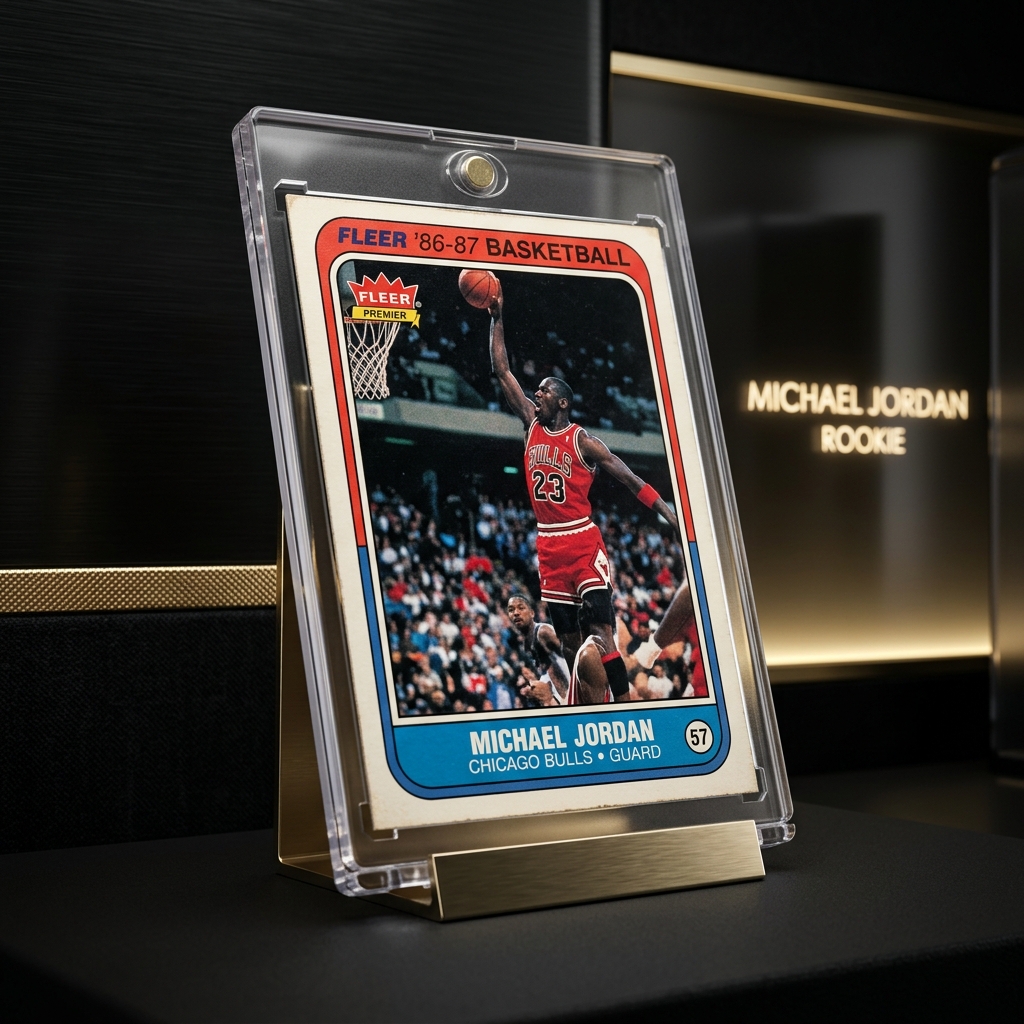
Basketball · 1986
Michael Jordan RC
Fleer Basketball #57
Raw NM:$200–$600
PSA 10:$700K–$1.4M
From raw card to slab — everything you need to know about the grading process, the grading scale, and how to submit your cards correctly.
These cards demonstrate when grading makes financial sense — and the enormous value premium a PSA 10 creates over a raw copy.
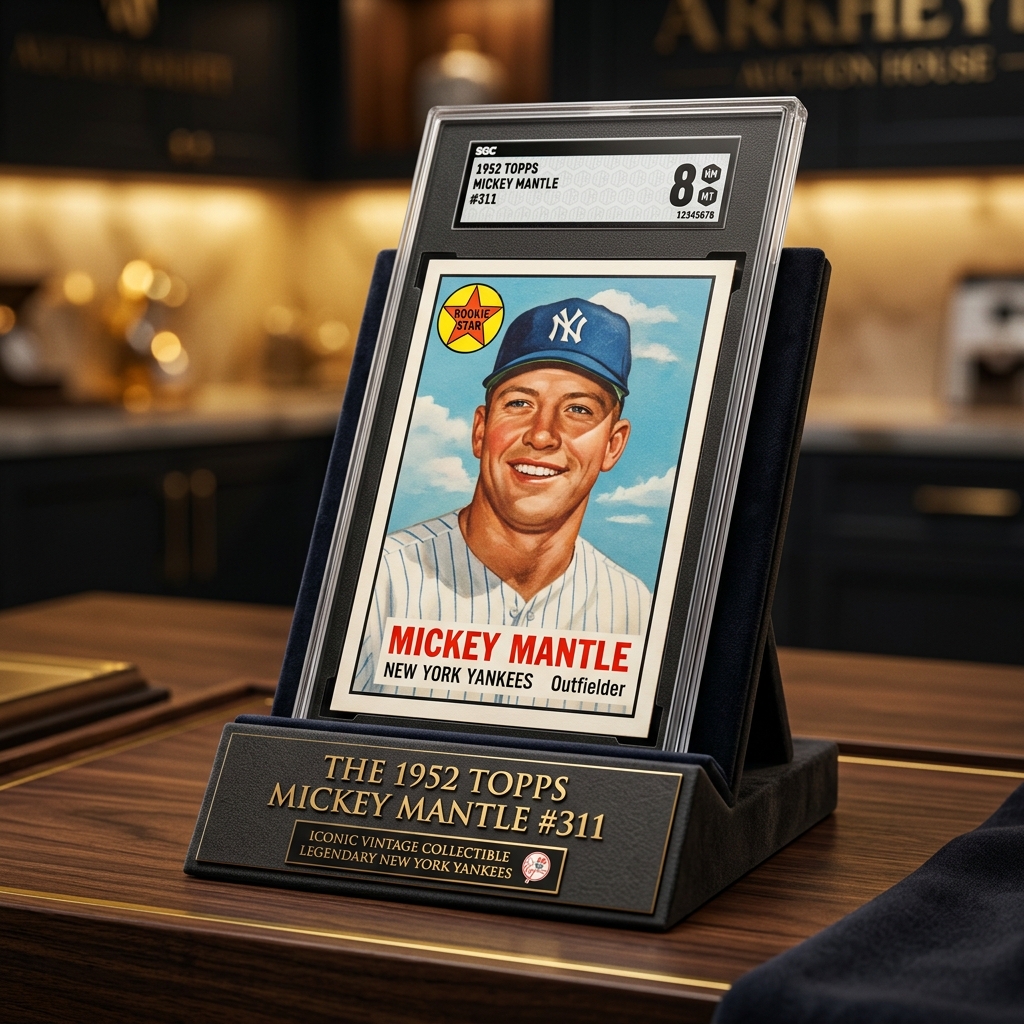

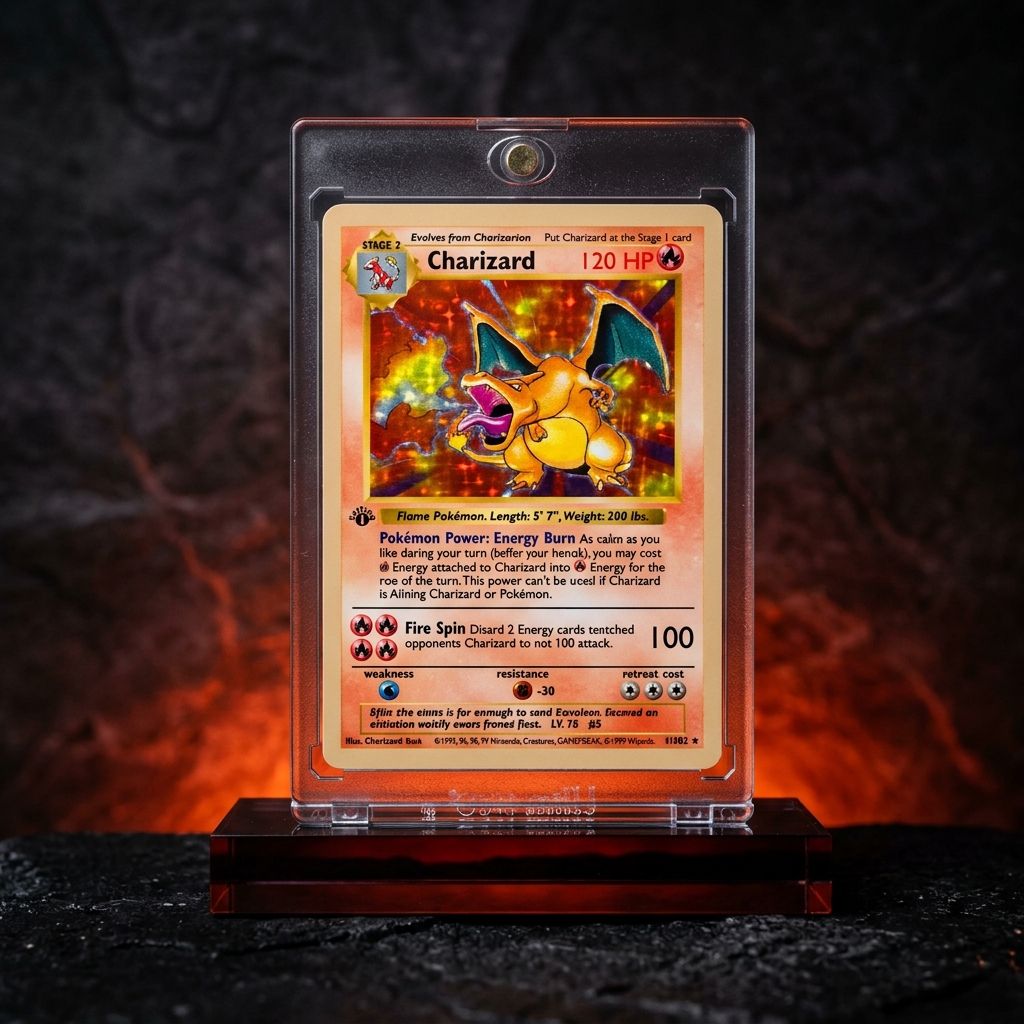
Card grading is the process of having a professional third-party company authenticate and assign a condition grade to your sports card. The card is then encapsulated in a tamper-evident plastic slab that permanently displays its grade. This single process can transform the value — and the marketability — of a card dramatically.
To understand the stakes, consider a 2018 Luka Dončić Prizm Base rookie card. In raw (ungraded) condition, it might sell for $80–$150 depending on perceived condition. That same card graded a PSA 10 Gem Mint regularly sells for $400–$600 or more. That's a 4–6x multiplier purely from the grade. For vintage cards and key rookies, PSA 10s can command 10–20x the raw card price.
Pro Tip: Before submitting any card for grading, research current sold prices for both raw and graded copies. Use CardValueFinder to quickly screen your card's value and estimate whether grading will be worth the cost and wait time.
Grading isn't just about money, though. It provides:
Professional graders evaluate every card on four key attributes. Understanding what graders look for in each category will help you better assess your cards before spending money on submission.
The ratio of border width on all four sides. PSA 10 requires 60/40 or better on both axes. Even slight off-centering can drop a card from a 10 to a 9 or lower.
All four corners are inspected under magnification. Any fraying, wear, or "fuzzing" lowers the grade. Sharp, pristine corners are the hardest attribute to maintain.
The four edges of the card are examined for nicks, chips, dents, or roughness. Even small imperfections visible on the white edges can reduce a grade.
Both the front and back of the card are checked for scratches, print defects, staining, creases, or loss of gloss. Surface issues are the most subjective element of grading.
Graders use magnification tools and controlled lighting to examine cards. They'll tilt the card under a raking light source to reveal surface scratches not visible under normal conditions. For centering, they use precise measurements rather than eyeballing. Any sign of cleaning, trimming, or alteration results in an "Authentic — Altered" designation rather than a numeric grade.
PSA uses a 1–10 numeric scale — the most widely recognized grading standard in the hobby. Here's exactly what each grade means:
| Grade | Name | Condition Summary | Typical Value Impact |
|---|---|---|---|
| 10 | Gem Mint | Virtually perfect. 60/40 centering, four sharp corners, clean edges, flawless surface. | Maximum premium (4–20x raw) |
| 9 | Mint | Only one minor flaw — slight centering or a barely noticeable corner touch. | 2–5x raw value |
| 8 | NM-MT | Near Mint–Mint. May have slight centering or one or two minor corner/edge issues. | 1.5–3x raw value |
| 7 | NM | Near Mint. Light corner or edge wear. Surface may show light scratch. | 1–2x raw value |
| 6 | EX-MT | Excellent–Mint. Slight rounding on corners, minor surface wear visible. | ~1x raw value |
| 5 | EX | Excellent. Some fraying on corners, visible surface wear, possible light crease. | Below raw value |
| 4 | VG-EX | Very Good–Excellent. Noticeable rounding on multiple corners, light creasing. | Below raw value |
| 3 | VG | Very Good. Heavy corner wear, possible small crease, surface scuffing. | Below raw value |
| 2 | Good | Significant wear throughout. Creases, heavy corner fraying, staining. | Below raw value |
| 1 | Poor | Severely damaged — extreme wear, major creases, tears, heavy staining. | Well below raw value |
BGS and SGC note: BGS (Beckett) uses the same 1–10 scale but also assigns subgrades and half-point increments (e.g., 9.5). SGC uses the same 1–10 scale as PSA. For a detailed company-by-company breakdown, see our PSA vs BGS vs CGC guide.
Submitting a card for grading doesn't have to be intimidating. Follow these steps to maximize your chances of a great result and avoid costly mistakes.
Before anything else, look up recent sold prices for your card in raw and graded form. Check eBay's sold listings and use CardValueFinder to pull current data. This tells you if grading is financially worthwhile.
Examine your card under good lighting with a loupe or magnifier. Check all four pillars: centering, corners, edges, and surface. If you spot multiple issues, grading may not achieve the grade needed to justify the cost.
Select PSA, BGS, CGC, or SGC based on card type, budget, and timeline. Each offers multiple service tiers at different price points and turnaround times. See our grading company comparison and grading cost guide for details.
Place each card in a clean penny sleeve, then a semi-rigid card saver or top loader. Do NOT use regular rigid top loaders alone — cards can shift. Secure multiple cards together and pack in a sturdy box with bubble wrap. Grading companies provide packaging instructions on their websites.
Log into your PSA, BGS, CGC, or SGC account, create a new submission order, and list every card you're sending with the declared value for each. Print the order confirmation and include it in your package. Ship with tracking and insurance.
Monitor your submission status through the grading company's online portal. When complete, your cards will be shipped back in their slabs. If a grade comes back lower than expected, you may have the option to review or crack the slab and resubmit under certain circumstances.
Small habits make a big difference when it comes to protecting a card's grade. Here's what experienced collectors do to give their cards the best shot.
Never touch the face or back of a card. Fingerprints leave oils that can mar the surface and show under grader lighting.
Put cards into a penny sleeve the moment they come out of a pack. Every minute unprotected is a risk to corners and edges.
Document every card with high-resolution photos before packaging. This gives you evidence if a card is damaged in transit or during handling.
Do not attempt to clean, polish, or enhance a card. Any cleaning leaves traces detectable under magnification and can result in an "Altered" designation.
Keep cards away from humidity, sunlight, and extreme temperatures. UV exposure yellows cards and humidity causes warping.
Improper packaging is a leading cause of damage in transit. Follow the grading company's exact packaging guidelines to protect your submission.
A PSA 10 Gem Mint grade is the highest possible score and represents a virtually perfect card. To earn a 10, a card must be perfectly or near-perfectly centered (60/40 or better on both axes), have four razor-sharp corners with zero visible wear, clean edges free of nicks or chips, and a flawless surface with no scratches, print defects, or staining. Only a small percentage of submitted cards — often fewer than 10–20% of modern cards and far fewer for vintage — receive a PSA 10.
Turnaround times vary significantly by company and the service tier you select. PSA typically ranges from around 20 days (Express tier) to 100+ days (Economy tier). BGS (Beckett) usually runs 20–50 days depending on tier. SGC is often the fastest, with many orders completing in 15–30 days. During high-demand periods — such as after major sports events or hobby surges — all companies can experience delays beyond their stated estimates. Always check each company's current published turnaround estimates before submitting.
As a general rule, a card should have a raw (ungraded) market value of at least $50–$75 before grading costs make financial sense — grading typically costs $20–$50+ per card plus shipping. Strong grading candidates include: rookie cards of star current or HOF players, vintage cards from the 1950s–1980s, short-print parallels and refractors, autographed cards, and cards you believe are in gem-mint condition. Always research current sold prices for both raw and graded versions of your specific card before submitting.
Absolutely not. Never attempt to clean, polish, rub, or chemically treat a sports card before grading submission. Even gentle cleaning can cause microscopic scratches to the card's surface — scratches that are clearly visible under the magnification and raking light conditions used by professional graders. Attempting to alter a card's appearance in any way can result in the grading company assigning an "Authentic — Altered" designation rather than a numeric grade, which is effectively worthless for resale. The only safe handling practice is holding cards by their edges and immediately sleeving them in a clean penny sleeve.
PSA (Professional Sports Authenticator) is the most established and recognized grading company, founded in 1991. PSA grades typically command the highest resale premiums for sports cards. BGS (Beckett Grading Services), founded in 1999, is unique for its subgrade system — it scores centering, corners, edges, and surface individually, plus assigns an overall grade with half-point increments. BGS 9.5 is widely considered equivalent to PSA 10 for modern cards. SGC, founded in 1998, is known for fast turnaround and is popular for vintage cards. For a full side-by-side breakdown including CGC, see our PSA vs BGS vs CGC vs SGC comparison.
Yes — PSA, BGS, CGC, and SGC all accept Pokémon cards for grading. CGC (Certified Guaranty Company) has become the dominant grader in the Pokémon market and is widely considered the top choice for Pokémon collectors due to its competitive pricing, strong population report, and growing collector community. PSA is also extremely popular for Pokémon cards given its brand recognition and resale premium. BGS grades Pokémon cards as well, though it holds a smaller market share in that segment. For MTG and other TCG cards, CGC is also the leading option.