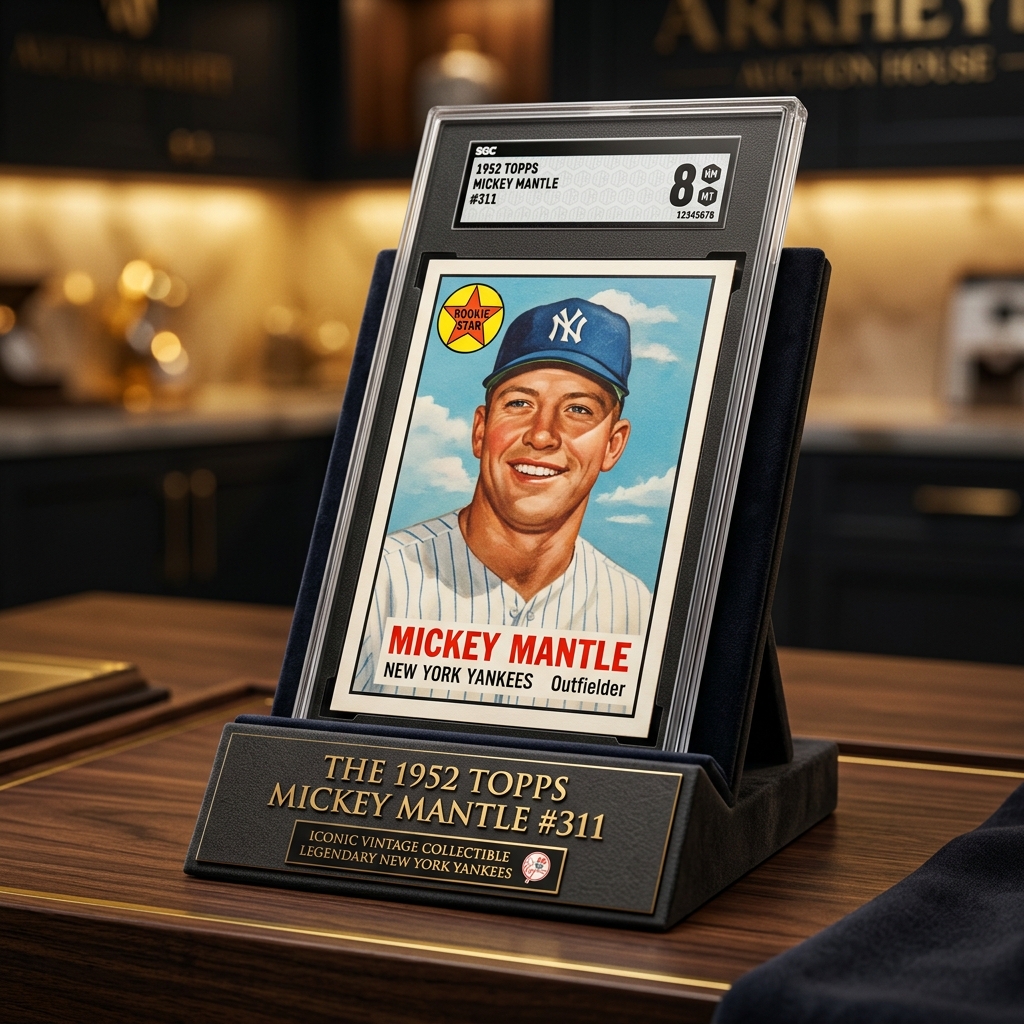
Upload any MLB card photo — Mantle, Trout, vintage Wagner, or that mystery card from grandad's attic — and get an instant AI-powered value estimate based on real market data.
Our AI handles all the heavy lifting — from identifying the card to pulling comparable recent sales data.
Photograph both the front and back of your card for the most accurate estimate. Good lighting and no glare gives the AI the best data to work with.
Our AI cross-references millions of cards to pinpoint exactly what you have — player, set, year, card number, parallel type, and estimated condition.
Receive a current market value range, PSA grade estimate, and comparable recent sales — all based on real transaction data from leading marketplaces.
Our calculator works on all MLB cards — from a $0.50 common to a $12M T206 Wagner.
Our AI analyzes six core factors that determine how much any baseball card is actually worth in today's market.
Hall of Famers and active superstars command massive premiums over journeyman players. A HOF player's rookie card can be worth 50× or more than a comparable common card from the same set. Career milestone moments — 3,000 hits, 500 HR — spike prices overnight.
Up to 50× value differenceNot all sets are created equal. Topps Chrome cards consistently trade at 5–20× the value of base Topps equivalents. Bowman Chrome is the gold standard for prospect cards. Upper Deck SP Authentic carries premiums for veterans. Stadium Club commands a niche following for photography quality.
5–20× set premium possibleThe parallel tier within a set can change a card's value by 10–1000×. A base Topps Chrome Refractor (/500) is typically worth 3–8× the base chrome. A Gold Refractor (/50) pushes further. A 1/1 Superfractor is in a category of its own — often selling for $1,000–$100,000+ depending on the player.
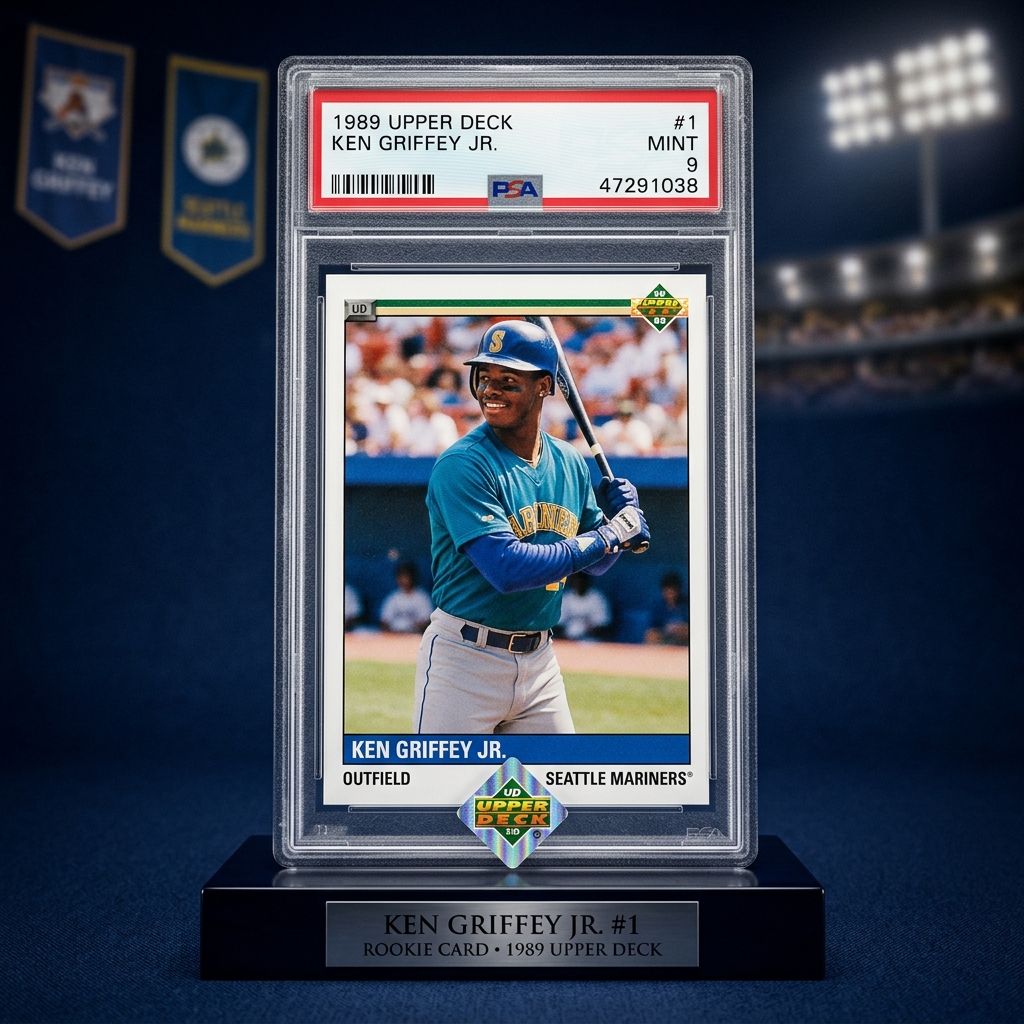
Massive premium for low printsCondition is often the single biggest value driver for common cards. Our AI reads surface wear, corner sharpness, edge condition, and centering from your photo to provide a PSA grade estimate. A Griffey Jr. RC graded PSA 10 is worth 30–50× a PSA 6 of the same card.
PSA grade estimate includedNumbered cards (/500, /99, /25, /10, 1/1) carry significant premiums proportional to their scarcity. A /10 numbered parallel of a star player can sell for 20–100× a base parallel. The iconic Topps Chrome 1/1 Superfractor has sold for millions for elite players like Trout and Acuña Jr.
Scarcity = premiumOn-card autographs — especially Bowman Chrome Autos — represent the highest-value tier in modern card collecting. Rookie Patch Autographs (RPAs) and National Treasures-style cards with jersey patches and signatures from top prospects routinely sell for $500–$50,000+ depending on the player's upside and grade.
Bowman Chrome Auto = highest tierUnderstanding condition grades is critical to knowing what your card is truly worth. Here's how PSA grades map to real-world card appearance and market value impact.
| Grade | PSA Scale | Appearance | Value Impact vs. Raw |
|---|---|---|---|
| Gem Mint | PSA 10 | Perfect in every way — sharp corners, centered, no surface flaws, brilliant gloss | 5–20× raw value |
| Mint | PSA 9 | Near-perfect with at most one minor flaw — a tiny print spot or slight centering issue | 2–5× raw value |
| Near Mint-Mint | PSA 8 | Light wear on corners or edges, minor centering off, clean surface overall | 1.5–2× raw value |
| Near Mint | PSA 7 | Slight wear visible under close inspection, still a presentable card with no major damage | ~Raw value (break-even) |
| Excellent-Mint | PSA 6 | Noticeable wear on corners and edges, possible light surface creasing, moderate centering issues | Below raw value |
* Value multipliers are approximate and vary by card. Rare vintage cards like pre-war tobacco sets may see far greater grade-to-value multipliers. Our AI provides a preliminary condition estimate — for high-value cards, always seek a formal PSA or SGC evaluation.
From tobacco-era classics to the latest Topps Chrome parallels, our AI is trained on virtually every major MLB set ever produced.
Our AI calculator gives you an instant estimate based on recent market data. But for maximum precision before a significant buy or sell, combining AI estimates with manual eBay sold listing research is the gold standard.
eBay's "Sold Listings" filter shows exactly what collectors have actually paid for the same card in recent weeks — not just asking prices. For cards worth $50+, spending five minutes on eBay sold comparables is always worthwhile. Filter by card name, grade (if applicable), and year. Look at the last 30–90 days of sales rather than relying on any single data point.
For deep dives into which cards command the highest prices, check out our full guide to the most valuable baseball cards — with current price ranges organized by player, era, and set.
📊 View Most Valuable Baseball Cards →Upload any baseball card photo — our AI identifies it and delivers a market value estimate in seconds. Completely free, no signup required.
Everything you need to know about getting the most accurate value estimate from our free AI-powered calculator.
Yes — CardValueFinder's baseball card value calculator is completely free to use. There's no account required, no subscription, and no hidden fees. Simply upload a photo of your card and receive an instant AI-powered value estimate. We plan to keep the core calculator free forever. Our mission is to make card valuation accessible to every collector, not just professionals with industry tools.
Our AI estimates are based on real recent sales data from eBay, PWCC, and major auction houses. For popular modern cards (Trout, Ohtani, Griffey), accuracy is typically within 10–20% of current market value. For rare vintage cards or unusual parallels, estimates provide a solid directional range. Always compare with recent eBay sold listings before making large buying or selling decisions. Our AI improves continuously as more transaction data becomes available.
Yes. Our AI is trained on tobacco-era sets including T206 White Borders, T205 Gold Borders, T210 Old Mill, T213 Coupon, and E-series early caramel cards. It can identify players, print variations, and backs (Sweet Caporal, Piedmont, Polar Bear, etc.) that significantly affect value. For ultra-rare cards like the T206 Wagner or E98 Black Swamp Find variants, we recommend supplementing our estimate with a formal PSA or SGC appraisal, as these cards require hands-on professional evaluation.
Base Topps is printed on standard cardstock with a matte finish and has been produced annually since 1952. Topps Chrome uses a chromium-based printing technology that creates a glossy, highly reflective surface. Chrome cards typically command 5–20× the value of base Topps equivalents, especially for rookies and star players. Topps Chrome also includes the fan-favorite Refractor parallel, which features a distinctive rainbow-like prismatic effect when the card is tilted in light. Refractors (/500 or unlimited) carry an additional 3–10× premium over the base Chrome card.
Bowman Chrome Autographs feature an on-card or sticker signature from the player. They are typically labeled "Autograph" on the card front and are numbered to a specific print run (e.g., /499, /99, /25, or 1/1). Our AI can identify Bowman Chrome Autos from a photo and distinguish them from base Chrome and refractor parallels. Bowman Chrome Autos of top prospects like Gunnar Henderson, Jackson Holliday, or Paul Skenes can be worth thousands of dollars in high grades. When uploading, try to capture the card's numbering stamp clearly on the back for the most accurate parallel identification.
Grading is worth it when: (1) the card is worth $50+ raw and appears to be in NM-MT or better condition, (2) it's a highly sought-after rookie or vintage card where a PSA 10 commands a significant premium, or (3) you're selling to a serious collector market where authentication adds trust. For common cards under $20, grading fees ($25–$100+ per card depending on the service level) typically aren't worth it. Our calculator gives you an estimate of what your card might grade as — helping you make a cost-benefit decision before paying any grading fees. For a full breakdown of grading economics, see our sports card grading cost guide.
Free AI-powered identification and instant market value estimates for any MLB card — vintage or modern, common or rare.