By CardValueFinder Editorial Team · Updated June 2026 · 14 min read
The complete 2026 guide to finding out what any baseball card is worth — upload a photo for an instant free estimate, or use our 3-step manual method with era reference tables, condition guide, and grading impact analysis.
3 StepsTo Check Value
$12.6MMost Valuable Sale
FreeAI Scan Tool
All ErasCovered
Want to skip straight to your baseball card value?
Upload a photo — instant AI estimate based on real sold data. No signup needed.
Whether you found a card in your attic, inherited a collection, or are assessing cards you've held for years — here are three methods to quickly establish what your baseball cards are worth right now in 2026.
1
Upload a Photo to CardValueFinder (Fastest — 30 Seconds)
Take a clear photo of the front and back of your card and upload it to CardValueFinder.com. Our AI instantly identifies the card — player, set, year, condition — and returns a current market estimate based on real eBay sold data. Free, no account required, results in seconds. Works for Topps, Bowman, Donruss, Upper Deck, Panini, Score and virtually every set ever produced.
2
Search eBay "Sold Items" for Your Exact Card
Search eBay for: [Player Name] [Year] [Brand] [Card Number if known]. Filter to "Completed & Sold" listings. Look for 3–5 recent sales of the same card in similar condition. Always use sold prices — not asking prices — since anyone can list a card at any price they want, but buyers only pay market value. This is the most reliable baseball card value lookup method for cards you can identify.
For cards potentially worth $100+, visit PSA's website (psacard.com) to check their SMR Price Guide and Population Report. The pop report shows how many copies have been graded at each grade level — low PSA 10 population with high demand drives premium values. PSA's guide uses auction results from major houses including Goldin, PWCC, and Heritage Auctions.
✅ Pro rule: Only sold prices matter. eBay shows both active (asking price) and sold (what buyers actually paid) listings. Filter to sold/completed listings for an accurate baseball card value checker — otherwise you're looking at seller wishful thinking, not market reality.
How to Identify What Baseball Card You Have
Before you can determine how much your baseball card is worth, you need to identify exactly what card you have. This sounds simple but can be tricky — especially with vintage cards or when dealing with parallels and variations.
Key Information to Find on Your Card
Brand/Manufacturer — Look for the logo or name on the front or back: Topps, Bowman, Donruss, Fleer, Score, Upper Deck, Panini, Stadium Club. This tells you the set family.
Year — Usually printed on the back of the card, sometimes as part of a copyright notice. Can also be part of the card design (e.g., "1989 Upper Deck").
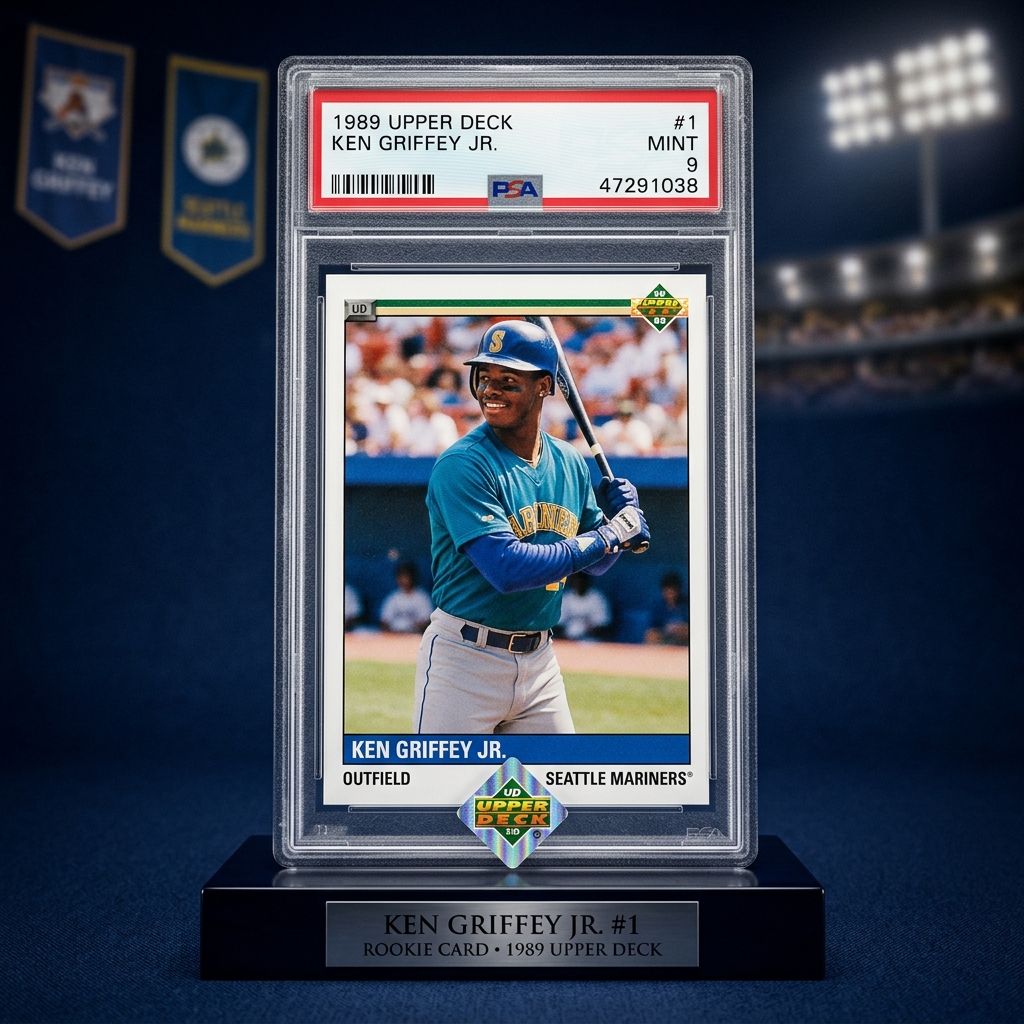
Card Number — Located on the back, usually bottom right. This is essential for identifying the exact card within the set (e.g., "Ken Griffey Jr. #1" in 1989 Upper Deck).
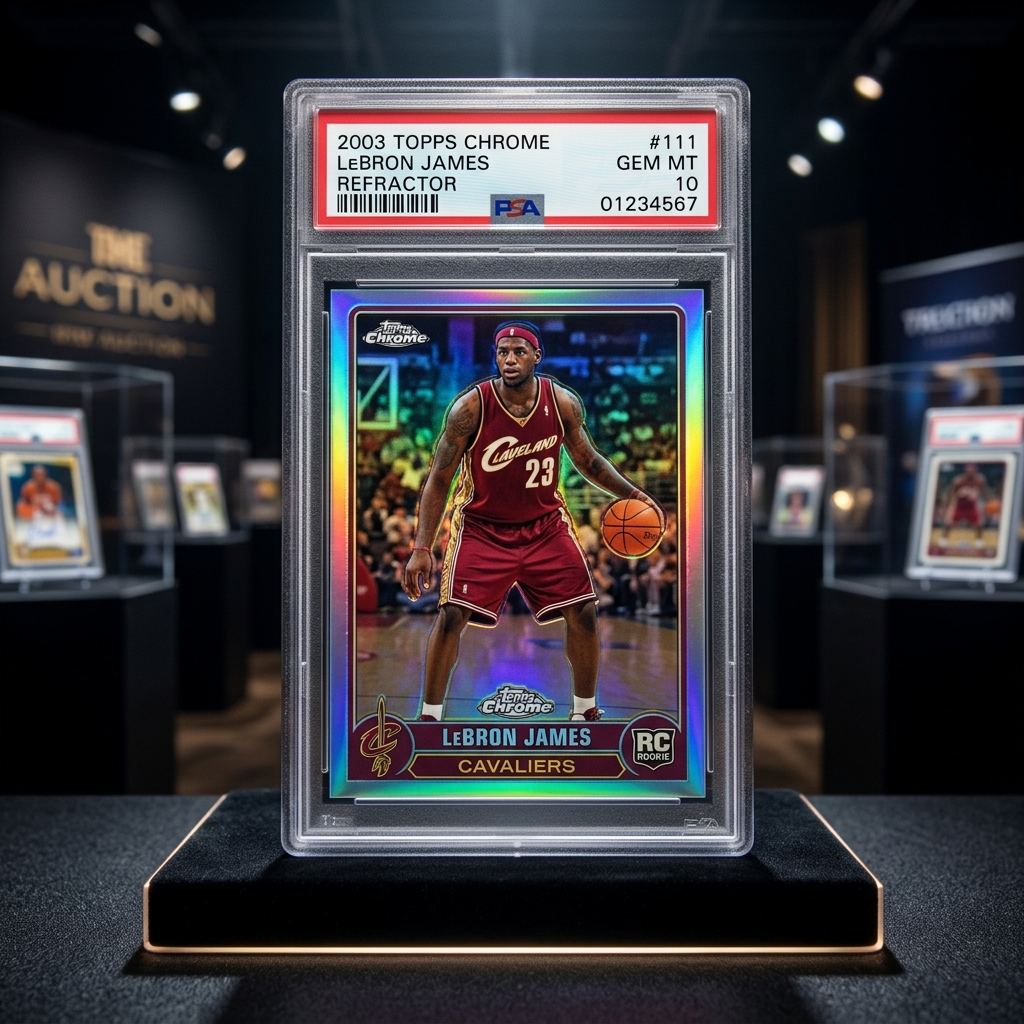
Parallel/Variation — Does the card have a metallic chrome look? Is it numbered on the back (e.g., "099/250")? Is it a Refractor, Foil, Gold, or Autograph? Parallels and variations can be worth 10–100× the base card.
Autograph — Is the signature on the card itself (on-card auto) or on a sticker adhered to the card? On-card autos are worth significantly more.
💡 Quick identification tip: Can't figure out what set your card is from? Upload a photo to CardValueFinder.com and let the AI identify it for you — it can distinguish between Bowman Chrome, Bowman Draft, and Bowman Prospects, and identify refractors, parallels, and variations automatically.
6 Factors That Determine Baseball Card Value
Understanding these six factors will help you immediately assess whether a baseball card deserves serious investigation — or whether it's a common worth pennies. The same card from different eras, with different conditions, or from different players can range from $0.05 to $12.6 million.
⭐
Player / Career Status
Hall of Famers, current MVPs, and all-time statistical leaders command the highest premiums. A Mickey Mantle, Ken Griffey Jr., Mike Trout, or Shohei Ohtani card from any era has inherent demand. A common player from the same set is worth pennies.
🏅
Condition / Grade
The single biggest value driver. A PSA 10 can be worth 100× a PSA 5 of the same card. Corners, centering, surface scratches, and back color all factor into professional grades from PSA, BGS, SGC, and CGC.
📅
Era & Scarcity
Pre-war cards (T206, E-series), 1952 Topps, and early Bowman sets are inherently scarce because most were discarded. Junk wax era (1987–1994 Topps, Donruss, Score, Fleer) cards were overproduced and largely worth nothing today.
🔢
Print Run / Numbered Parallels
Modern Bowman Chrome and Topps Chrome cards numbered /10, /5, or /1 are genuinely scarce. The Superfractor (1/1) is the apex. A numbered parallel can be worth 20–100× the base card of the same player.
🖊️
Autograph & Relic
On-card autographs (signed directly on the card surface) command 2–3× premiums over sticker autos. Rookie Patch Autos (RPAs) with on-card signatures and game-used memorabilia are the pinnacle of modern card collecting.
📈
Market Timing
Card values fluctuate with player performance. A World Series win, MVP award, no-hitter, or record-breaking performance can spike a player's card values 50–500% overnight. Shohei Ohtani cards move on every historic performance.
Era Reference: What Baseball Cards Are Worth by Year
The era your card was produced in is the first quick filter. Use this reference to immediately assess whether your old baseball card values are worth investigating further or whether they're in the large "overproduced common" category.
Era
Years
Common Players
Hall of Famers
What Matters Most
Pre-War / Tobacco
Before 1933
$20–$500+
$500–$7.25M+
T206, age, rarity, Honus Wagner
Golden Age Bowman/Topps
1948–1956
$10–$150
$500–$12.6M+
1952 Topps Mantle, condition critical
Topps Monopoly Era
1957–1979
$2–$40
$50–$15K+
High-number series scarcer, key RCs
Pre-Junk Wax
1980–1986
$0.25–$5
$20–$5K+
Cal Ripken RC, Rickey Henderson RC
Junk Wax Era
1987–1994
$0.05–$0.50
$1–$2,500 (PSA 10 only)
Griffey Jr. RC, Roger Clemens RC — PSA 10 only
Insert & Parallel Era
1994–2002
$0.10–$2
$10–$1K+
Numbered parallels, auto RCs
Modern Chrome Era
2003–2016
$0.50–$5
$20–$100K+
Bowman Chrome prospect autos, Trout RC
Prospect Auto Era
2017–2026
$0.25–$3
$10–$15K+
Bowman Chrome 1st Auto, Ohtani, Soto
⚠️ Junk wax reality check: Billions of baseball cards were produced between 1987 and 1994 by Topps, Donruss, Fleer, and Score. Warehouses full of unsold packs sat for years. Most of these cards are worth $0.05–$0.50 regardless of the player. The only exceptions are PSA 10 graded rookie cards of Hall of Famers — and even those are worth far less than collectors hoped.
Condition Guide: Why Grade Matters So Much for Baseball Card Value
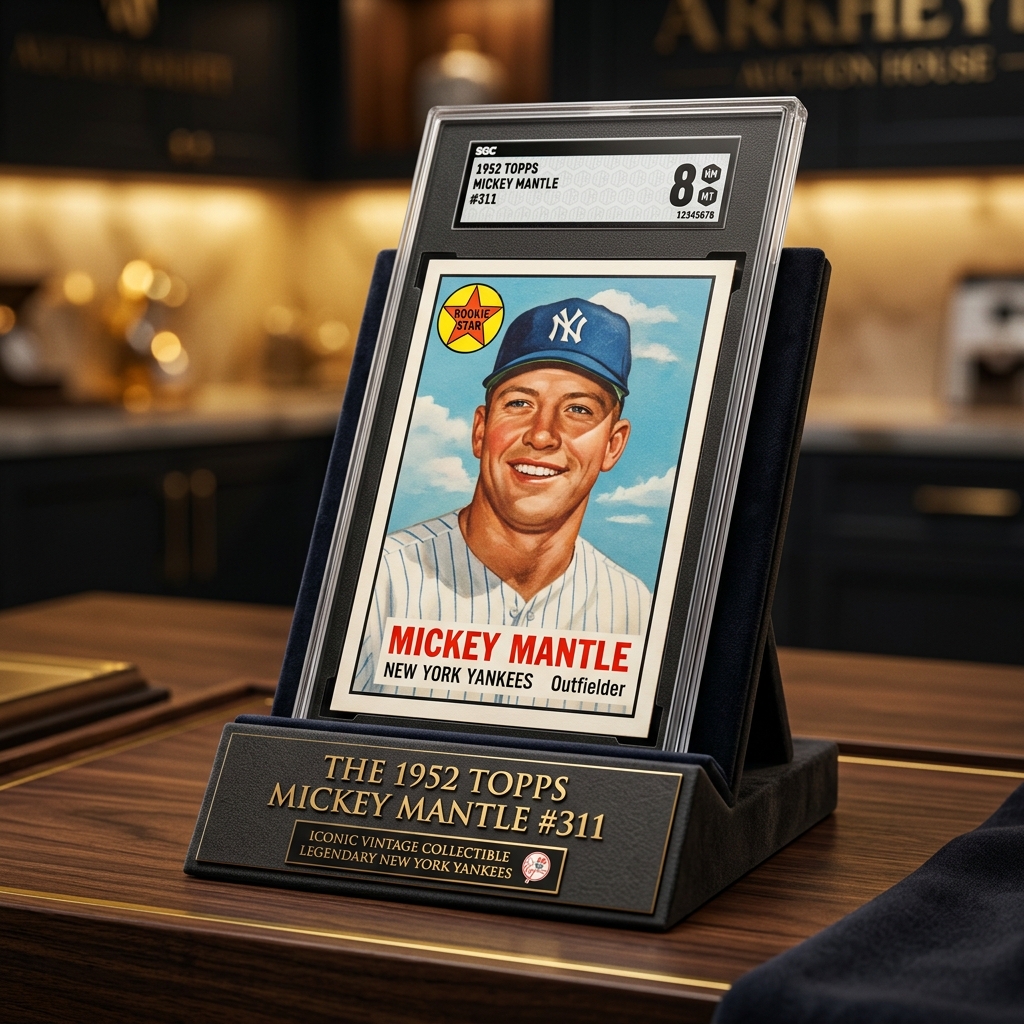
Condition is the single most critical factor in baseball card value — especially for vintage cards. The 1952 Topps Mickey Mantle in PSA 9 has sold for $12.6 million. The same card in PSA 1 (Poor) is worth a few thousand dollars. That's a 5,000× price difference driven entirely by condition. Here's what professional graders look for:
10
Gem Mint
Perfect corners, no scratches, 55/45+ centering, bright surface
9
Mint
One minor flaw allowed. Near perfect in every way
8
NM-Mint
Very slight wear, slight centering issue
7
Near Mint
Light surface wear visible under inspection
5
Excellent
Noticeable rounding on corners, obvious wear
1–3
Poor–Fair
Creases, stains, tears — significant damage
How to Self-Assess Your Card's Condition
Corners — Sharp corners = potential PSA 9/10. Rounded or fuzzy corners = PSA 5–7 maximum. This is the #1 grade killer.
Surface — Hold the card under a bright light and look for scratches, print defects, or staining. Surface wear is often invisible until under direct light.
Centering — Flip the card upright and look at the borders top-to-bottom and left-to-right. PSA 10 requires approximately 55/45 or better. A 70/30 or worse centering typically prevents PSA 9.
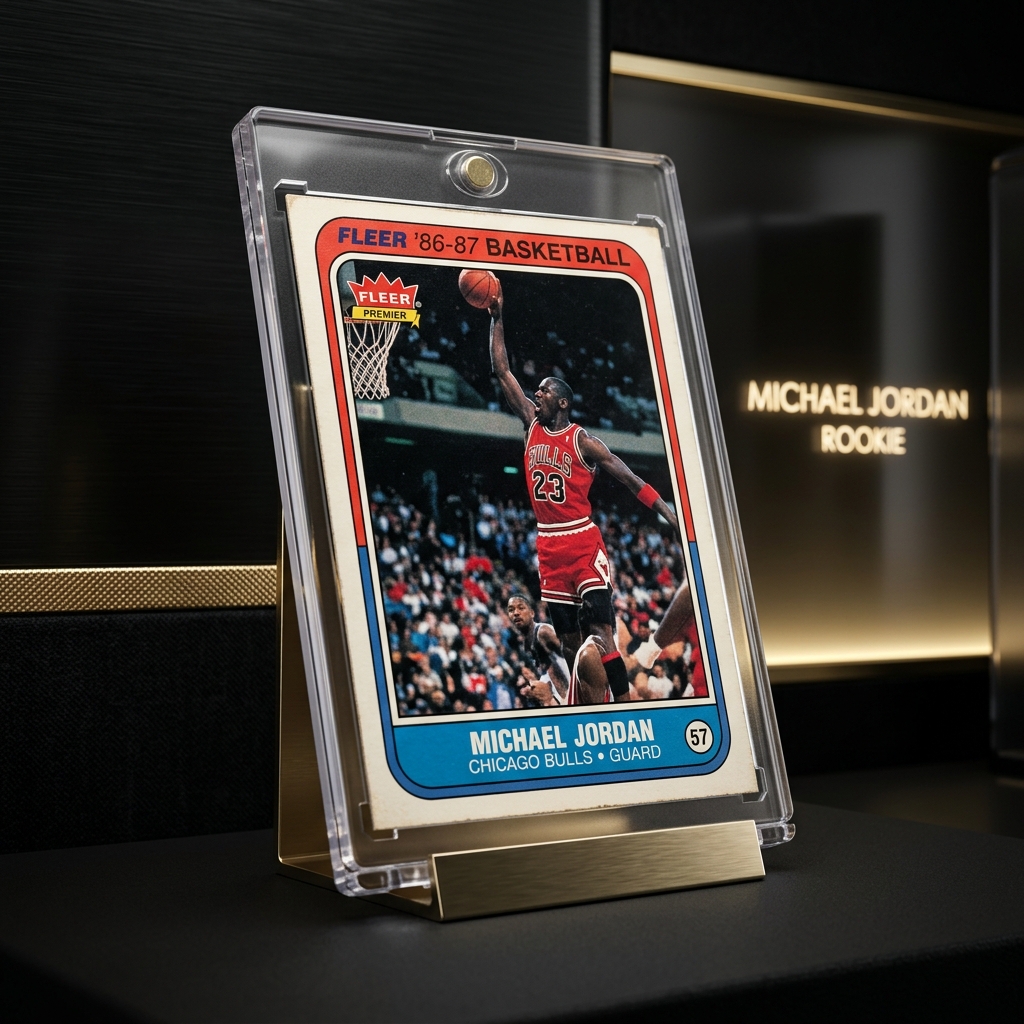
Edges — Run your finger along all four edges. Chipping (common on 1986-87 Fleer cards, for example) kills the grade immediately.
Get Your Baseball Card's Real-Time Value — Free
Upload a photo of any baseball card and get an AI estimate based on current eBay sold data, including a condition assessment.
Most Searched Baseball Cards & Current Values (2026)
These are the cards collectors search for most — either because they're genuinely valuable, or because people commonly find them in old collections and wonder if they struck gold. Use our free card scanner for a real-time estimate on your specific card and condition.
Card
Raw (NM)
PSA 9
PSA 10
1952 Topps Mickey Mantle #311
$5K–$30K
$500K–$2M
$12.6M record
T206 Honus Wagner
Authenticate first
$1M+
$7.25M+ record
1989 Upper Deck Ken Griffey Jr. RC #1
$10–$40
$100–$300
$500–$2,500
2009 Bowman Chrome Mike Trout Auto RC
$800–$2K
$15K–$40K
$100K+ (Superfractor: $3.93M)
2001 Bowman Chrome Albert Pujols Auto /500
N/A
$8K–$25K
$50K+
1982 Topps Cal Ripken Jr. RC
$15–$60
$200–$600
$2K–$6K
1980 Topps Rickey Henderson RC
$40–$150
$500–$1,500
$3K–$10K
1963 Topps Pete Rose RC #537
$80–$300
$1K–$4K
$10K–$25K
2018 Topps Update Shohei Ohtani RC
$10–$40
$100–$350
$500–$2,000
2011 Bowman Chrome Mike Trout Auto RC
$500–$1,500
$5K–$15K
$30K–$80K
1987 Topps Barry Bonds RC
$2–$8
$30–$100
$300–$800
1985 Topps Mark McGwire RC #401
$5–$20
$60–$200
$600–$2K
All values are estimates based on June 2026 sold data. Use CardValueFinder for a free real-time estimate on your specific card and condition.
Should You Get Your Baseball Card Graded by PSA, BGS, or SGC?
Professional grading by PSA (Professional Sports Authenticator), BGS (Beckett Grading Services), or SGC authenticates your card and assigns an official condition grade on a 1–10 scale. For baseball card grading value to make financial sense, the PSA 10 (or even PSA 9) premium must substantially exceed the raw value plus grading costs.
When to Get Your Baseball Card Graded
The card's raw value is $75 or more in current market conditions
The card appears in Near Mint or better condition — sharp corners, clean surface, reasonable centering
It's a rookie baseball card of a current star, Hall of Famer, or historically significant player
You plan to sell and want to maximize liquidity — PSA-graded cards sell faster and for more on eBay
The card is vintage (pre-1970) — even lower grades benefit from authentication
You believe the card is a high-value variation (Superfractor, 1/1, printing plate) that needs authentication
When NOT to Grade
The raw card is worth less than $50 — grading fees ($25–$150+) won't be recovered
The card has visible creases, bends, ink marks, stains, or corner rounding beyond NM
It's from the junk wax era (1987–1994 commons) — PSA 10 grade multiplier won't offset grading cost
You need money quickly — PSA Economy currently takes 3–6+ months for return
Not sure if grading is worth it for your specific card? Use our free card value estimator to check the current PSA 10 vs raw price spread before submitting.
Where to Sell Baseball Cards for the Best Price
Knowing your baseball card value is only half the equation — getting that value when you sell requires choosing the right venue for your specific cards.
eBay — Best for most cards ($10–$500). Largest buyer pool, transparent pricing, and you control the minimum. Use 7-day auctions for lower-value cards; fixed price (Buy It Now) for cards with clear recent comps. eBay's "Sold Listings" view is the most reliable price reference in the hobby.
COMC (Check Out My Cards) — Good for mid-range cards ($25–$200) where you don't want to handle individual listings and shipping. They photograph, store, and ship your cards for a fee, giving you access to their buyer network.
Goldin Auctions — Best for high-value cards ($500+). Goldin attracts serious collectors who pay above eBay for trophy pieces. Heritage Auctions and PWCC are similar alternatives for premium cards.
Facebook Marketplace / BST Groups — Good for bulk lower-value cards or immediate local sales. Zero fees but no buyer protection. Know your prices before engaging.
Local Card Shop or Show — Expect 40–60% of card value if selling to a dealer — they need margin to resell. Better for bulk or immediate cash sales.
Frequently Asked Questions — Baseball Card Value 2026
The fastest way is to upload a photo to CardValueFinder.com for a free AI-powered estimate. You can also manually search eBay "Sold Items" for the exact card (player, year, set, condition). Always use completed (sold) listings — not active listings — since anyone can list at any price, but buyers only pay market value. For high-value cards, check PSA's SMR Price Guide and recent Goldin or Heritage auction results.
Four quick checks: (1) Is it a Hall of Famer or current star? Mickey Mantle, Ken Griffey Jr., Mike Trout, Shohei Ohtani cards always have demand. (2) Was it printed before 1970? Pre-1970 Topps and Bowman cards are inherently scarce. (3) Is it a rookie card? First-year licensed cards of legends are the hobby's most valuable category. (4) Is it in Near Mint or better condition? Even slightly damaged vintage cards are worth significantly less. Upload a photo to CardValueFinder for an instant AI assessment.
Most 1980s baseball cards — especially from the junk wax era (1987–1994) — are worth very little. Billions of Topps, Donruss, Fleer, and Score cards were mass-produced and saved, flooding the market permanently. Exceptions: 1989 Upper Deck Ken Griffey Jr. RC #1 (PSA 10: $500–$2,500), 1985 Topps Mark McGwire RC, 1982 Topps Cal Ripken Jr. RC, 1984 Donruss Don Mattingly RC, and any Nolan Ryan or George Brett from 1979-1985 in pristine PSA 10 condition. If you have a Griffey Jr. in excellent shape, it's worth getting graded.
The most valuable baseball cards ever sold: T206 Honus Wagner ($7.25M+, 2021), 1952 Topps Mickey Mantle PSA 9 ($12.6M, 2022), 2009 Bowman Chrome Mike Trout Superfractor 1/1 ($3.93M, 2020), 1914 Baltimore News Babe Ruth ($4.2M+), 1952 Topps Mickey Mantle PSA 8 ($2.8M+, 2022), 2001 Bowman Chrome Albert Pujols Auto /500 ($50K+). For current active players, Shohei Ohtani Bowman Chrome autos and Topps Chrome rookie variations are the most valuable.
Condition is the single most important factor in baseball card value. A 1952 Topps Mickey Mantle in PSA 9 sold for $12.6 million — the same card in PSA 1 is worth a fraction of that. Even for modern Bowman Chrome prospect autos, a PSA 10 is worth 3–10× the same card in PSA 8. Graders evaluate: corner sharpness, surface cleanliness, centering (top-to-bottom and left-to-right), and edge wear. A single soft corner on an otherwise perfect card can drop a grade from 10 to 8, cutting the value by 50%+.
Grading is financially worthwhile when: the raw card is worth $75+, it appears in Near Mint or better condition (sharp corners, no scratches, good centering), and the PSA 9 or PSA 10 grade premium significantly exceeds the grading cost ($25–$150+). Don't grade junk wax era commons regardless of condition — the grading fee will exceed any value increase. PSA Economy currently takes 3–6 months. Check our complete grading cost guide for current PSA, BGS, and SGC pricing.
The 1989 Upper Deck Ken Griffey Jr. RC #1 values in 2026: Raw NM: $10–$40 | PSA 7: $30–$80 | PSA 8: $60–$150 | PSA 9: $100–$300 | PSA 10 Gem Mint: $500–$2,500. As the first card in the first Upper Deck set, and the most iconic junk wax era rookie, the Griffey 1989 UD is a standout exception to the junk wax value rule. In PSA 10, it remains one of the hobby's most recognized and consistently traded modern vintage cards.
Pre-1970 baseball cards are genuinely scarce — most were thrown away, ruined, or rubber-banded. The 1952 Topps set has individual common cards worth $20–$200 in decent condition. Hall of Famers from the 1952, 1953, and 1954 Topps sets in PSA 8+ are consistently worth thousands. The T206 Honus Wagner is the holy grail at $7.25M+. Even a 1952 Topps Topps common player card is worth $30–$100 in VG condition simply because of its age and scarcity. Always have pre-1960 cards evaluated.
To identify a baseball card: (1) Look for the brand name on front or back — Topps, Bowman, Donruss, Upper Deck, Panini, Score, Fleer; (2) Find the year — usually on the back in the stats or copyright line; (3) Find the card number (back, usually bottom right); (4) Check for parallel indicators — chrome finish, numbered print run, foil, or autograph. Then upload a photo to CardValueFinder.com for an instant AI value estimate — our tool identifies parallels, variations, and refractors automatically.
A raw baseball card is ungraded — its condition is unverified and must be assessed by the individual buyer. A graded card has been authenticated and scored by PSA, BGS, or SGC on a 1–10 scale, then encased in a tamper-evident holder (slab). PSA 10 Gem Mint cards typically sell for 3–10× a raw NM copy for modern cards, and 100×+ for vintage cards like the 1952 Topps Mantle. Graded cards are more liquid on eBay and at auction because buyers trust the authenticated condition and don't need to inspect the card directly.