How the Basketball Card Calculator Works

Three simple steps stand between you and knowing exactly what your NBA card is worth on today's market — no expertise required.

Take a Clear Photo

Photograph both the front and back of your basketball card in good natural lighting. Place it flat on a dark, non-reflective surface. Avoid glare, especially on Chrome and Prizm cards whose foil surfaces can wash out under direct light.

💡 Pro tip: Take a second photo at a 45° angle to capture the holo shimmer — this helps our AI distinguish Silver Prizm from base Prizm.
AI Identifies Your Card

Our computer vision model reads the card's visual fingerprints: player name, set year, card number, manufacturer branding, border color, parallel sheen, print run markings, and surface condition indicators like corner wear, surface scratches, and centering ratio.

💡 The AI works on cards from 1969 Topps all the way through current-year Panini and Topps releases.
Get Your Value Estimate

You receive a current price range for the raw card in its estimated condition, a PSA grade estimate (e.g., PSA 7–8 based on visible wear), the graded value at that PSA tier, and comparable recent eBay and marketplace sales that support the estimate.

💡 Graded value is only shown when grading is economically worthwhile for your card's estimated raw value.

What the Calculator Checks to Value Your Card

Six key factors determine 95% of any NBA card's market value. Our AI weighs all six simultaneously the moment you upload your photo.

Player
Up to 1,000× value gap

Michael Jordan, LeBron James, and Kobe Bryant cards can be worth thousands of times more than a bench player from the same set and year. The AI reads jersey numbers, face recognition, and name text to confirm the player identity — critical for vintage cards with worn borders.

Card Brand & Set
5–50× difference

Panini Prizm and National Treasures trade at premiums of 5–50× over base-issue Donruss or Score cards for the same player and year. The AI identifies manufacturer logos, set-specific borders, foil patterns, and back designs that determine which product line your card came from.

Parallel Type
10× gap on same player

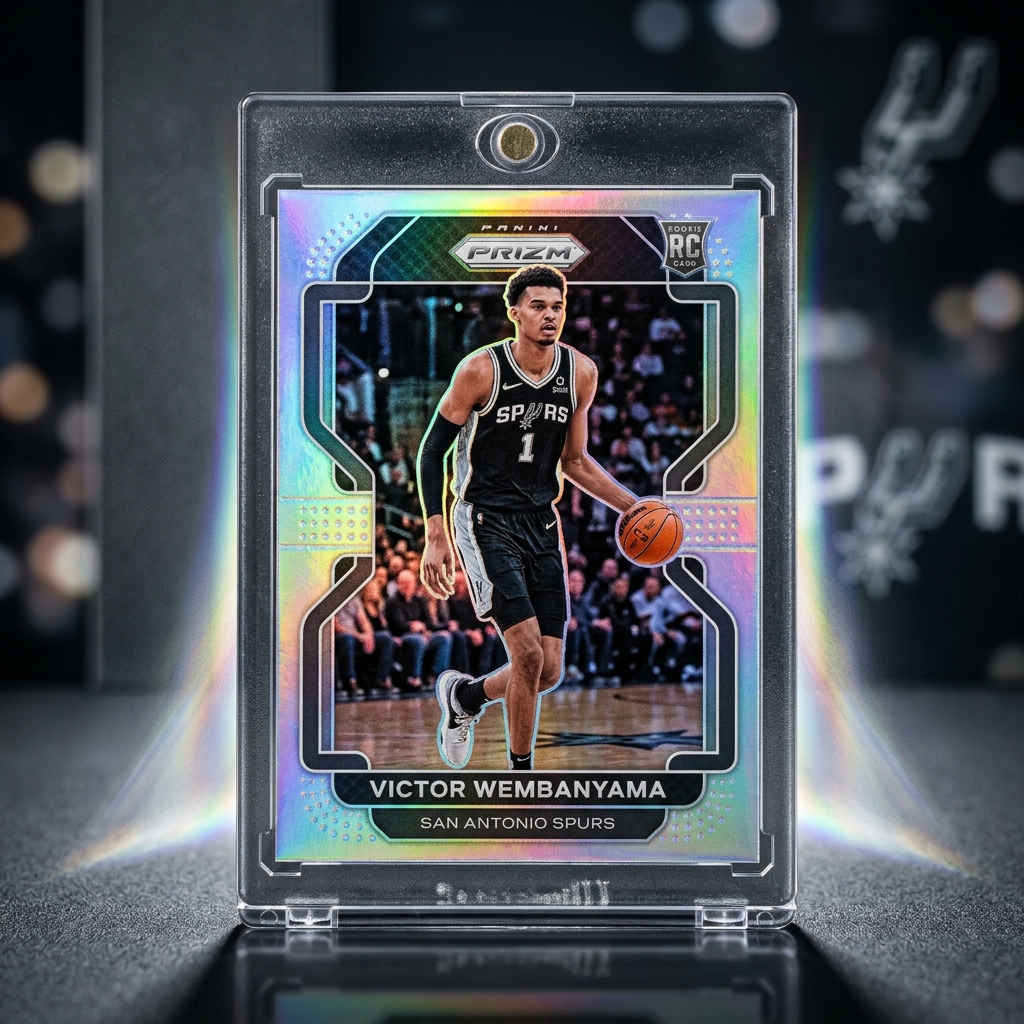
A Luka Dončić Silver Prizm is worth 10–30× more than his base Prizm. Our AI analyzes border shimmer patterns, color saturation, and foil characteristics to distinguish base, Silver, Hyper, Gold, Red, and other parallel variants — the single biggest source of misidentification by new collectors.

Condition Estimate
PSA 7 vs PSA 10 = 10× difference

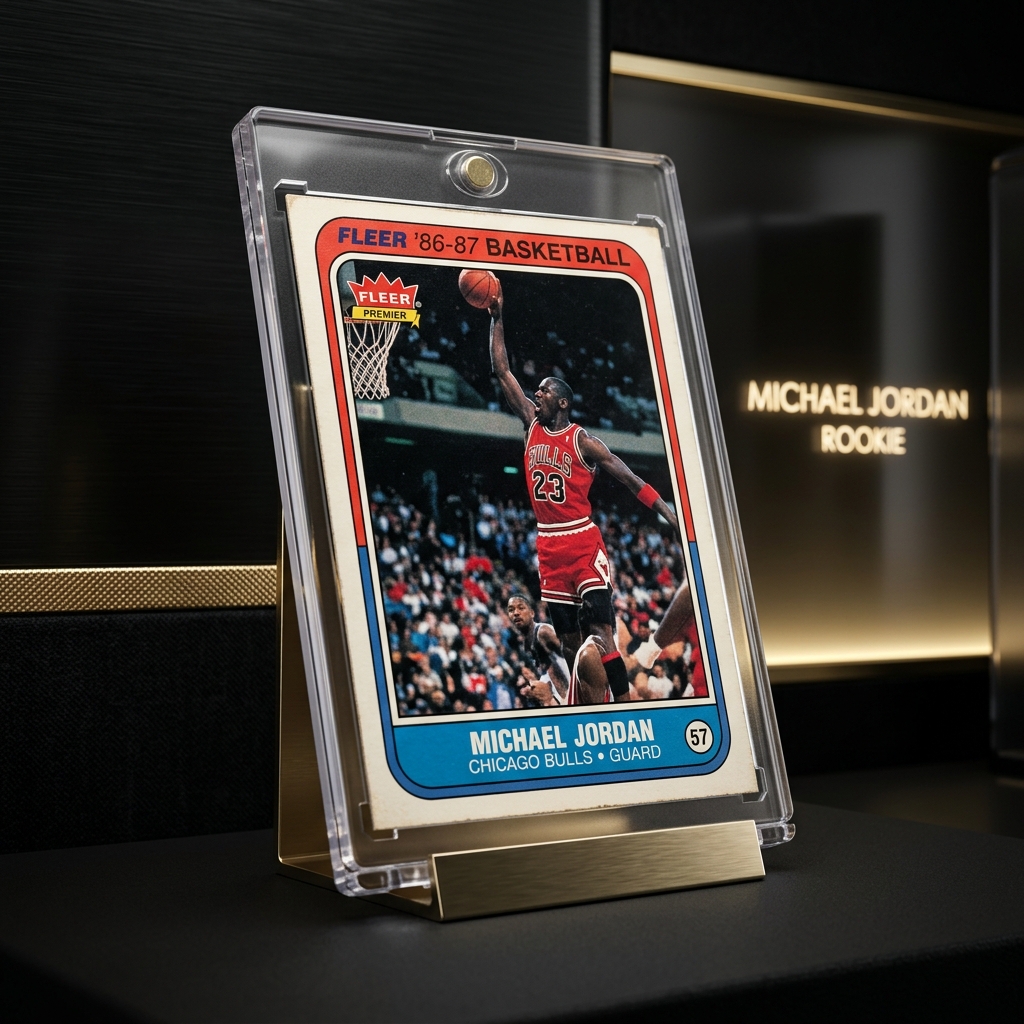
The AI reads corner sharpness, surface scratch density, edge wear, and centering ratio from your photo to estimate a likely PSA grade range. A Jordan RC in PSA 10 is worth $700K+; the same card in PSA 7 is $35K–$60K. Condition is everything on high-value cards.

Print Run
Gold /10 vs Silver unlimited

Numbered parallels command massive scarcity premiums. A Wembanyama Gold Prizm numbered to /10 is worth 10–30× a Silver Prizm. The AI reads serial number stamps ("/10", "/25", "/49") and stamp positioning to identify print run from the card image without you having to squint at tiny text.

Autograph / Patch
National Treasures RPA = maximum tier

Rookie Patch Autographs (RPAs) from National Treasures, Flawless, and Immaculate are the pinnacle of basketball card collecting. A Wembanyama National Treasures RPA can exceed $100,000. The AI detects on-card signatures, sticker autographs, patch windows, and game-used memorabilia swatches.
NBA Card Condition Guide: PSA Grades Explained

Condition is the most misunderstood factor in basketball card valuation. This table shows how PSA grades map to physical card characteristics and value multipliers.

PSA Grade Label Corners Surface Centering Value vs Raw
PSA 10 Gem Mint Perfectly sharp, no wear No scratches, no print defects 55/45 or better 5–200× raw value
PSA 9 Mint Sharp with minor imperfections Minor surface scratches OK 65/35 or better 2–20× raw value
PSA 8 NM–MT Light surface wear visible Light scratches acceptable 70/30 or better 1–5× raw value
PSA 7 Near Mint Small nicks on corners Moderate scratching 75/25 or better 0.8–2× raw value
PSA 6 Ex–MT Visible corner rounding Light crease may exist 80/20 or better 0.4–1× raw value
PSA 5 & below Excellent & lower Rounded corners, heavy wear Creases, staining possible May be off-center 0.1–0.5× raw value

When to Also Check eBay Sold Listings

Our AI gives you a fast estimate, but for high-value cards, cross-referencing with recent eBay sales adds confidence.

Using eBay "Sold" Filter as a Cross-Check

For any card our calculator values above $200, we recommend confirming the estimate by searching eBay's completed/sold listings. Filter by "Sold Items" to see actual transaction prices — not asking prices — from the past 90 days. Focus on cards in the same condition tier our AI estimated.

For the most valuable NBA cards — pre-2000 star rookies, numbered-to-10 parallels, National Treasures RPAs — also check PWCC Marketplace, Goldin Auctions, and Heritage Auctions for recent hammer prices. Auction houses often record the highest realized prices for top-condition examples.

🏆 See the Most Valuable Basketball Cards List →

Frequently Asked Questions

Everything you need to know about our basketball card value calculator — and basketball card valuation in general.

Yes — CardValueFinder's basketball card value calculator is completely free to use, with no account required and no hidden fees. Upload a photo and get an instant AI-powered value estimate at no cost. We believe every collector deserves to know what their cards are worth without paying for the information.
Our AI is trained on millions of real eBay and marketplace sales and identifies the card's player, set, year, parallel type, and estimated condition. For most mainstream NBA cards — modern Prizm rookies, classic Fleer and Topps issues — the estimate is within 15–25% of recent comparable sales. Rare 1-of-1s and highly condition-sensitive vintage cards like the 1986 Fleer Jordan may have wider ranges because small condition differences create enormous price swings at the top of the market.
Yes. Our AI is trained on vintage NBA sets including 1969 Topps, 1980–81 Topps (the Bird/Magic/Dr. J set), 1986–87 Fleer (home of the Jordan rookie), 1988–89 Fleer, 1990–91 Fleer, Hoops, and SkyBox sets, all the way through the modern era. For older cards, upload a clear front and back photo — the card number on the back helps the AI confirm the specific card within a large vintage set.
Prizm Silver parallels have a distinctive silver holographic shimmer on the card borders, while base Prizm cards have a white or muted border. Hold the card under a light and tilt it — Silver Prizm will flash with a rainbow-oil-slick shimmer. Base Prizm does not. Our AI analyzes the visual characteristics of your uploaded photo to distinguish Silver, Hyper, Gold, and base cards — a distinction worth 5–50× in value for the same player. This is the single most common valuation mistake we see from new collectors.
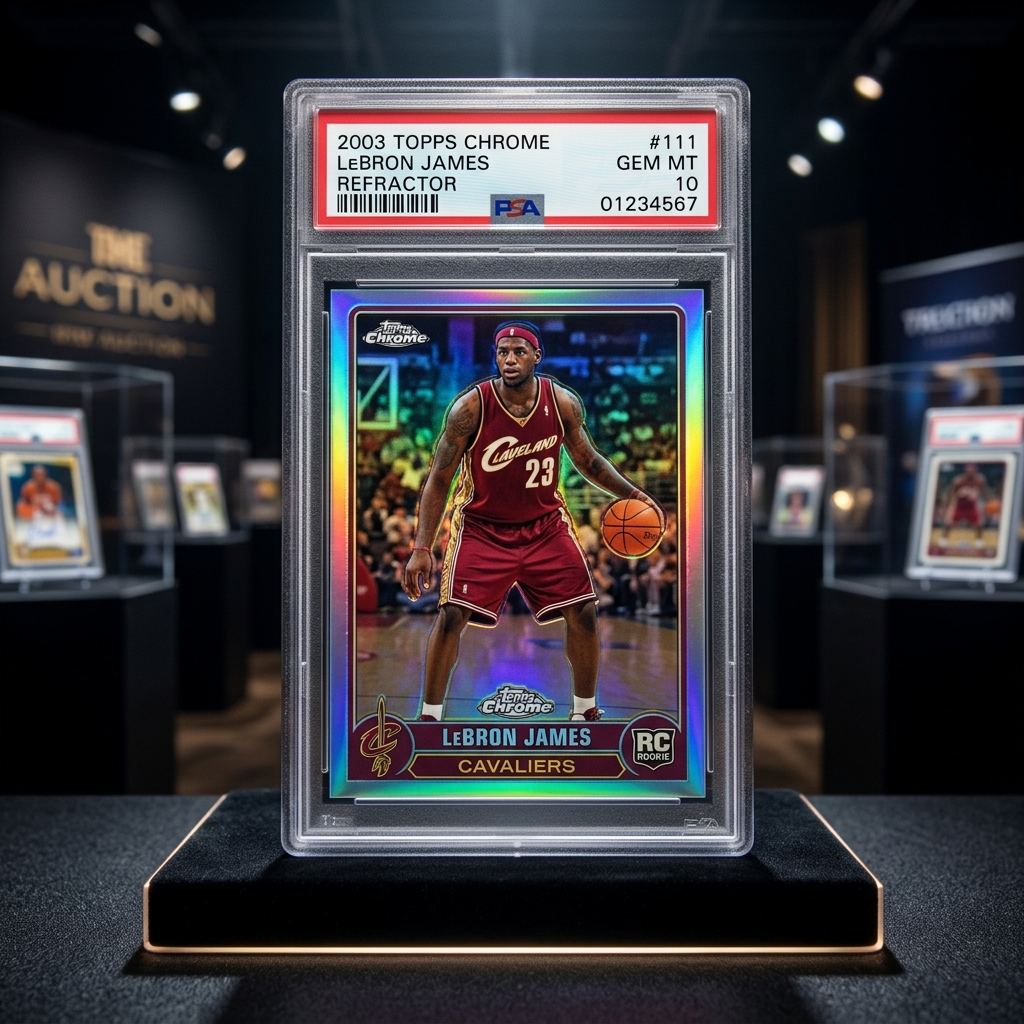
Standard Topps cards are printed on traditional cardstock with a matte or semi-gloss finish — the same format used since 1952. Topps Chrome cards use a chromium technology that gives the card a shiny, mirror-like surface similar to a CD. Chrome cards are generally worth 3–10× more than their base Topps counterparts for the same player and year, are more popular with PSA graders because the surface shows condition issues more clearly, and have their own refractor parallel ecosystem (Refractor, Gold Refractor, etc.) that adds additional value tiers.
It depends on the card and its raw value. For pre-2000 star rookies (Jordan, Magic, Bird) and any modern card worth $300+ in raw condition, PSA grading almost always returns more on the sale than the grading cost — a PSA 10 Jordan RC commands 100–200× more than a raw copy in similar condition. For modern base cards under $50, grading fees ($25–$150+ depending on service level) often exceed the value increase a grade label adds. Our calculator shows you both raw and graded value estimates so you can make an informed decision before spending money on grading.